Short answer
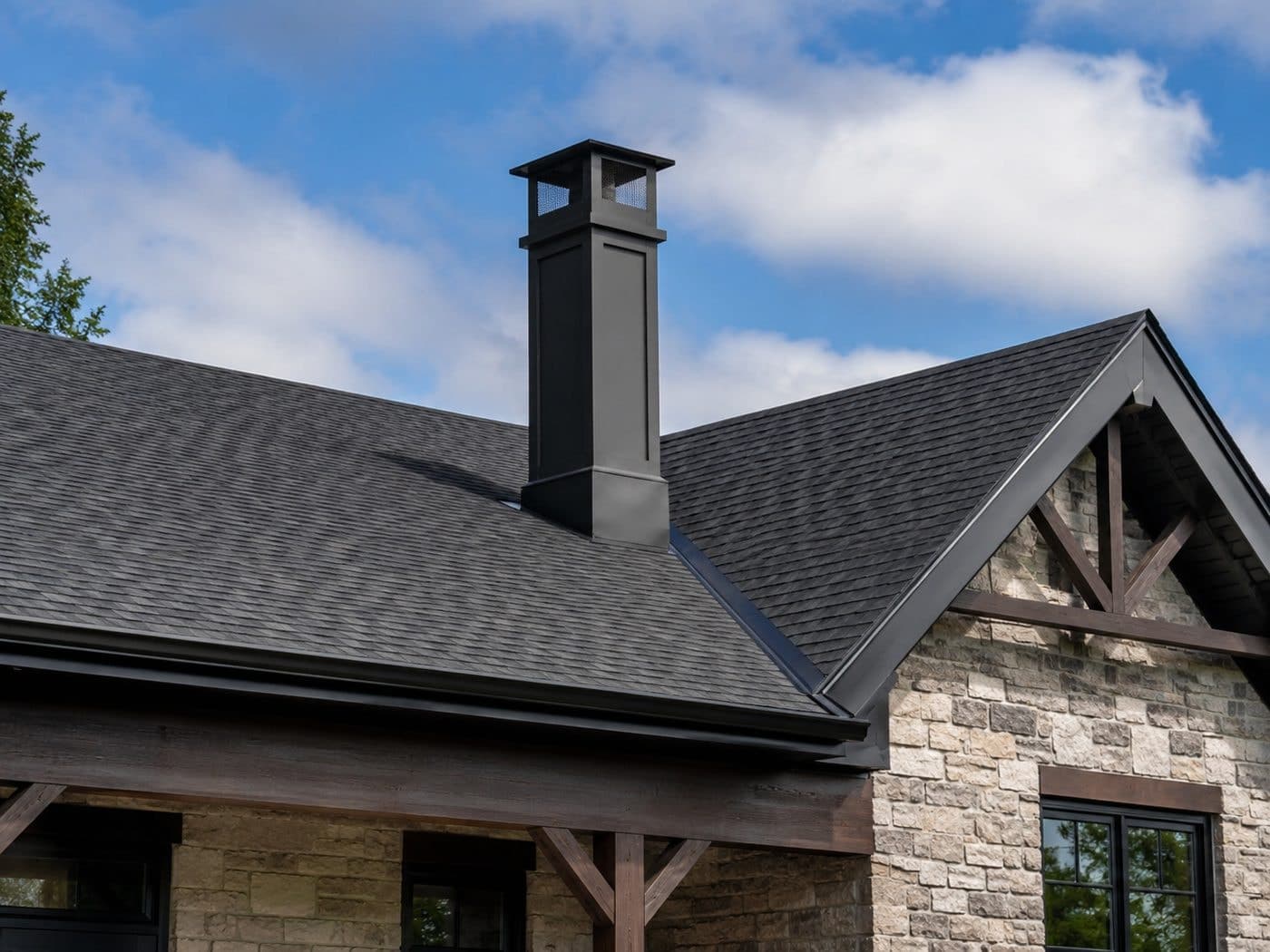
Stainless steel lasts longer than galvanized in Florida’s rain and humidity, which is why it is the usual replacement. But a flat stainless cover still holds water, so slope or cross-breaks, a raised collar around the flue and a drip-edge skirt matter as much as the metal.
Why chase covers rust faster in Florida
Galvanized steel is ordinary steel with a zinc coating. The zinc corrodes slowly instead of the steel, until it is used up. A chase cover wears through its zinc fastest where water stands, where leaves sit wet against it, and around fastener holes. Orlando averages about 51.5 inches of rain a year and high humidity for much of it (CurrentResults, NCEI normals), so a flat galvanized cover spends a lot of time wet. Once rust starts, it spreads from the low spots until pinholes let water into the chase.
Factory-built fireplace and chimney chase, cutaway
- 1Termination cap. The listed cap on top of the metal chimney pipe.
- 2Storm collar. Sealed band around the pipe that sheds water onto the chase cover.
- 3Chase cover. Sheet-metal top of the framed chase. Should slope, with a raised collar and drip edge.
- 4Chase. The wood-framed box, finished in siding or stucco, that encloses the chimney pipe.
- 5Chimney pipe. Listed metal flue sections made for this specific fireplace model.
- 6Fireplace unit. The factory-built metal firebox, tested and listed as one system with its chimney.
- 7Refractory panels. Molded liner panels lining the unit's firebox. Replaced only with listed parts.
Materials compared
| Material | Corrosion resistance | Notes |
|---|---|---|
| Galvanized steel | Lowest; zinc coating wears away | Typical builder-grade original; often painted to slow rust |
| Galvalume (aluminum-zinc coated steel) | Better than galvanized | Still coated steel; cut edges and scratches are weak points |
| Powder-coated or painted steel | Depends on the coating | Good color match; coating damage exposes steel |
| Stainless steel | High | The usual replacement; won’t rust through under normal conditions |
| Copper | Very high | Long-lived and distinctive; higher cost and green patina |
Design details that matter as much as the metal
- Slope or cross-breaks so water runs off instead of pooling. A flat cover, even in stainless, holds water against the collar and seams.
- A raised collar around the flue opening so water can’t run into the hole.
- A skirt with a drip edge (a hem that kicks out) so water drops clear of the siding instead of running down the trim.
- Fasteners through the skirt, not the top surface.
- A gauge heavy enough not to sag between the framing members.
- A proper storm collar on the flue above the collar, sealed as the fireplace manufacturer specifies.
Manufacturer installation instructions for factory-built fireplaces describe the same principles. One widely used manual calls for a raised collar at the flue opening, a drip edge and a chase top sloped away from the opening (Heatilator C40 installation manual).
Custom vs off-the-shelf
| Feature | Off-the-shelf | Custom-fabricated |
|---|---|---|
| Fit | Standard sizes; may leave gaps or overhang badly | Measured to the chase and flue position |
| Slope | Often flat or minimal | Can be built with cross-breaks or a pitched top |
| Skirt | Fixed depth | Sized to lap the siding or stucco properly |
| Flue position | Centered hole | Hole placed where the flue actually is |
Fit
- Off-the-shelf
- Standard sizes; may leave gaps or overhang badly
- Custom-fabricated
- Measured to the chase and flue position
Slope
- Off-the-shelf
- Often flat or minimal
- Custom-fabricated
- Can be built with cross-breaks or a pitched top
Skirt
- Off-the-shelf
- Fixed depth
- Custom-fabricated
- Sized to lap the siding or stucco properly
Flue position
- Off-the-shelf
- Centered hole
- Custom-fabricated
- Hole placed where the flue actually is
Signs it’s time to replace
- Rust streaks running down the chase siding or stucco.
- A dip in the middle that holds water after rain.
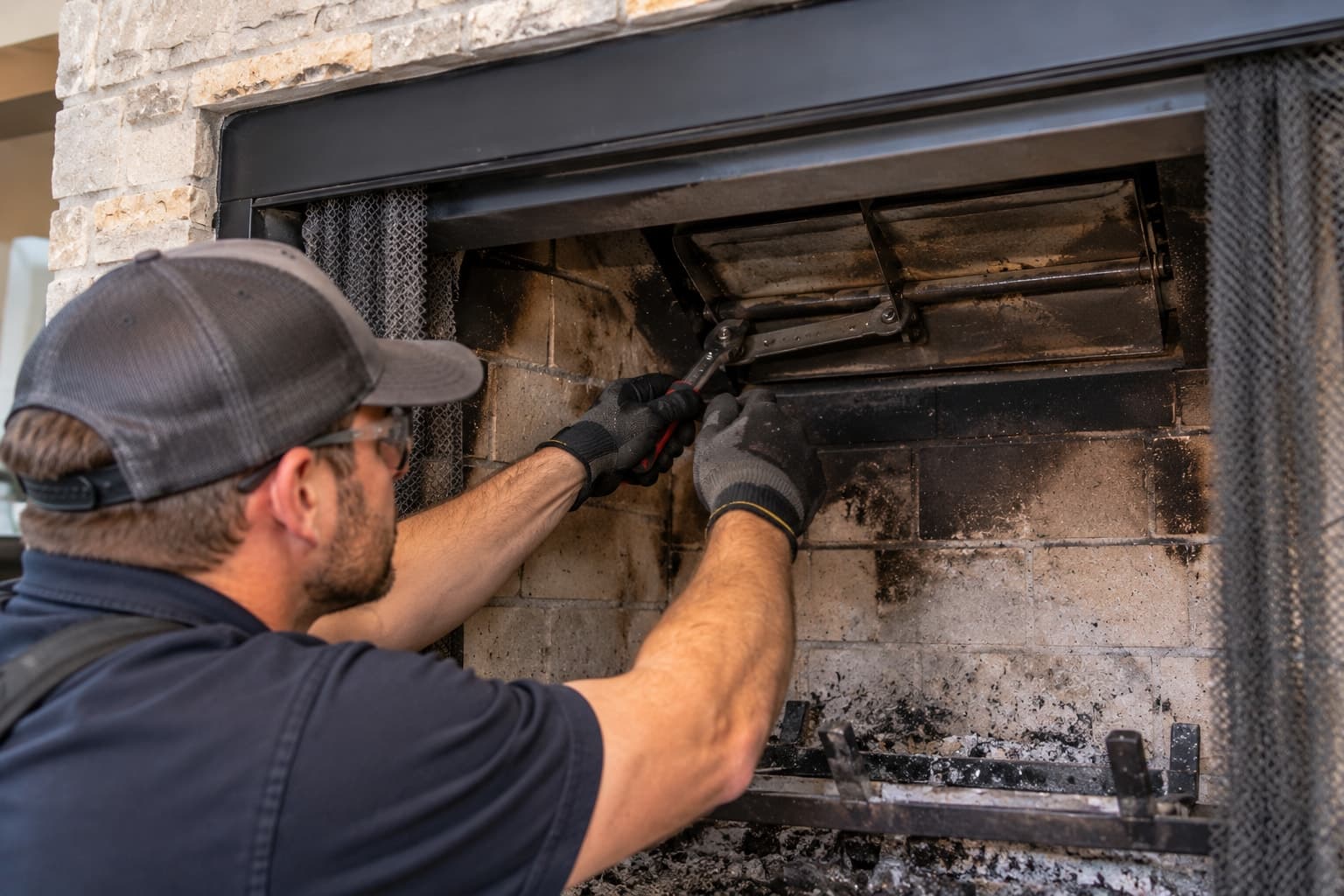
- Pinholes or rust-through, or rust flakes appearing in the firebox and cracked refractory panels.
- Soft or rotten trim at the top of the chase.
The symptom guide on rust on a chimney chase explains what each rust pattern means for the framing. If the cover has let water into the chase, the wood under it is checked before a new one goes on, as part of chase cover replacement.
For what a chase cover is and how it differs from a cap, see chimney cap vs chase cover; for water already reaching the firebox, water coming through a chimney covers the checks. Rusted covers are common on framed chases in newer subdivisions; fireplace repair in Lake Mary and chimney repair around Clermont describe that housing locally.
References (2)
Facts and figures on this page come from these references.