What a chase is, and why it rots
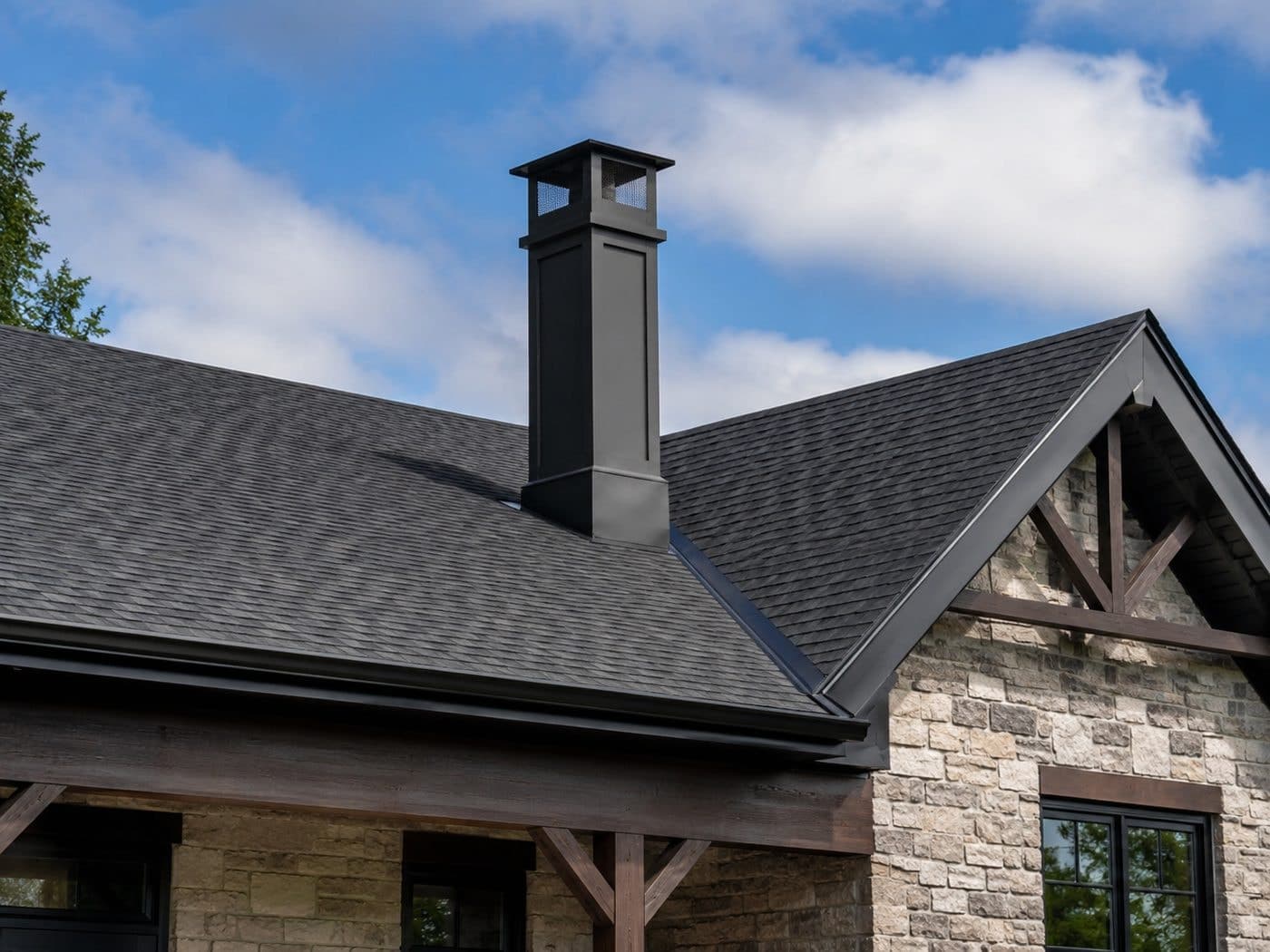
Many Central Florida homes with factory-built fireplaces have a chimney that looks like a tall box on the roof or outside wall. Inside is a wood frame, sheathing and a metal flue pipe. Outside is whatever matches the house: lap siding, fiber-cement panels or stucco over lath. At the top is a metal chase cover. The box is only as dry as its top and its seams. If you are not sure whether your chimney is framed or brick, the guide to masonry vs factory-built fireplaces walks through the clues.
Factory-built fireplace and chimney chase, cutaway
- 1Termination cap. The listed cap on top of the metal chimney pipe.
- 2Storm collar. Sealed band around the pipe that sheds water onto the chase cover.
- 3Chase cover. Sheet-metal top of the framed chase. Should slope, with a raised collar and drip edge.
- 4Chase. The wood-framed box, finished in siding or stucco, that encloses the chimney pipe.
- 5Chimney pipe. Listed metal flue sections made for this specific fireplace model.
- 6Fireplace unit. The factory-built metal firebox, tested and listed as one system with its chimney.
- 7Refractory panels. Molded liner panels lining the unit's firebox. Replaced only with listed parts.
Where the damage is, and what it points to
| Where you see damage | Most likely water path | Look at |
|---|---|---|
| Top trim boards soft, swollen or split | Water spilling off a chase cover with no drip edge, or soaking under it | The chase cover and its skirt |
| Siding swelling at the corners | Open corner trim or butt joints | Corner boards and caulked seams |
| Stucco cracked or bulging, often near the top | Water behind the stucco from the top or from cracks | Chase cover, stucco cracks, weep screed at the bottom |
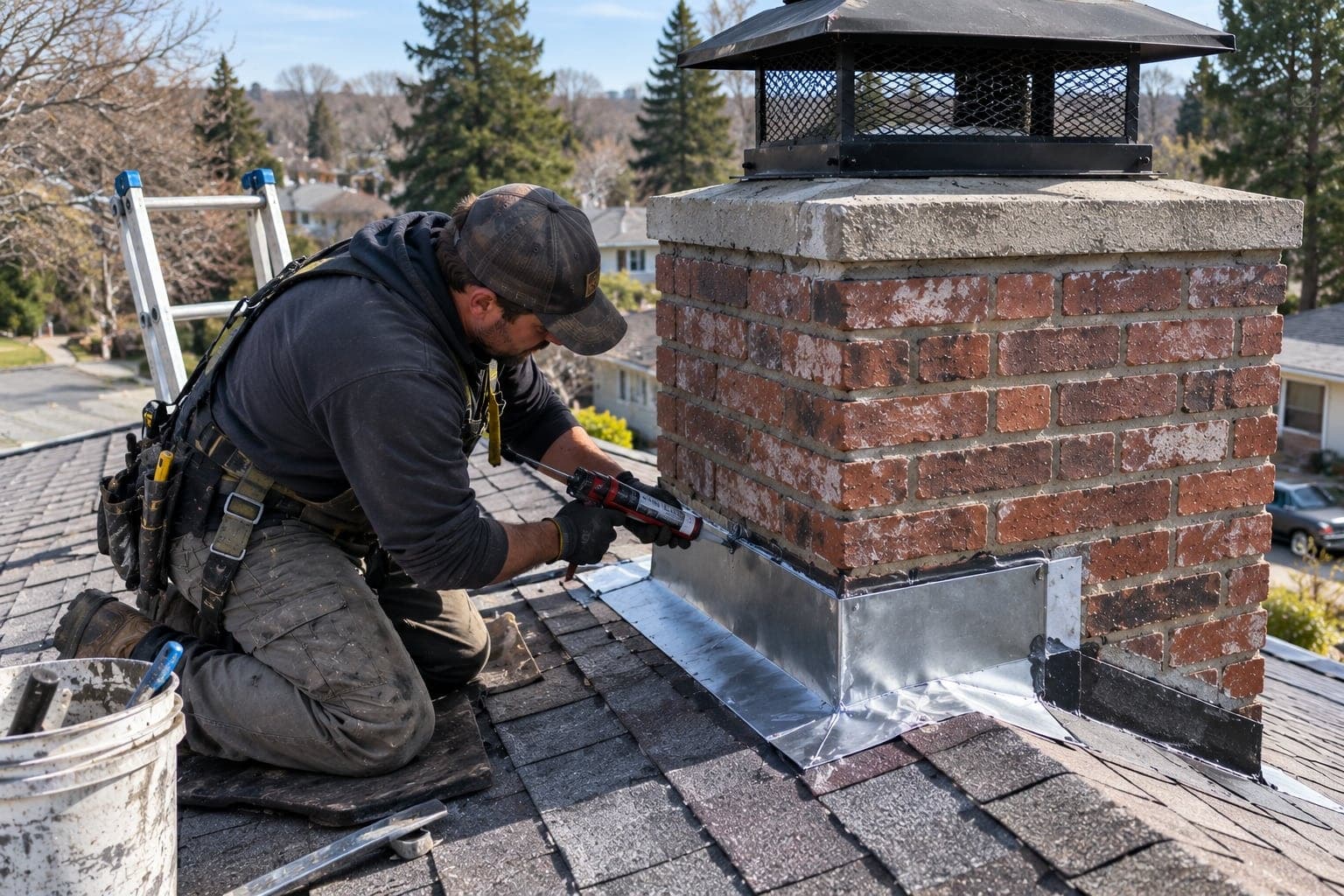
| Damage near the roof line | Failed flashing or sealant where chase meets roof | Step flashing and counterflashing at the base of the chase |
| Paint peeling in sheets on one side | Wind-driven rain on the weather side | Seams and trim on that side |
| Holes pecked into siding | Woodpeckers after insects in damp wood | Moisture in that area |
Possible causes, most likely first
01Chase cover holding or leaking water
- What you may notice
- Rust streaks from the top, a dip in the cover, damage worst at the top of the chase.
- How it’s confirmed
- Checking the cover for slope, rust-through, skirt overhang and a drip edge. Covered in detail in rust on a chimney chase.
02Open seams in the cladding
- What you may notice
- Gaps at corner boards, cracked caulk at butt joints, swollen board ends.
- How it’s confirmed
- Probing each seam and the wood behind it for moisture and rot.
03Flashing at the roof line
- What you may notice
- Staining on the ceiling or attic framing where the chase meets the roof.
- How it’s confirmed
- Checking the flashing at the base of the chase; see leaking chimney flashing.
04Water inside the chase from the flue penetration
- What you may notice
- Rust on top of the fireplace unit, water in the firebox, stains near the fireplace.
- How it’s confirmed
- Checking the storm collar and cover collar around the flue pipe.
Safe checks you can do
- Press on siding and trim you can reach safely from the ground or a window. Firm is good; soft, spongy or crumbly is not.
- Tap stucco lightly with a knuckle. A hollow sound over an area can mean it has separated from the lath behind it.
- Use binoculars to look at the top of the chase for a dished or rusty cover and at the top trim for swelling.
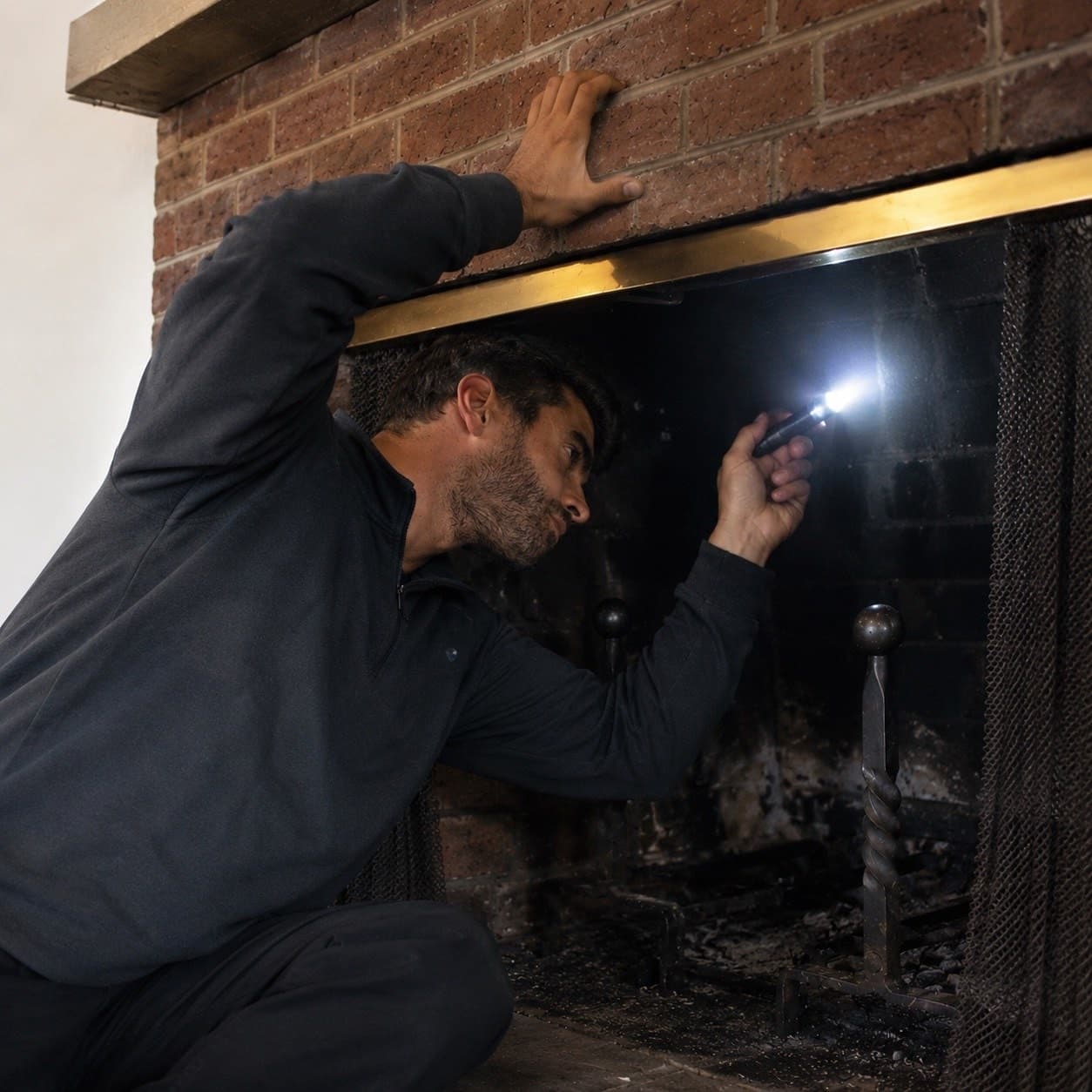
- Inside, look for stains on the wall or ceiling near the fireplace and for rust on top of the fireplace unit.
- Take dated photos of each side so you can tell if cracks or swelling are spreading.
Don’t just paint or caulk over it
Fresh paint and caulk make a damaged chase look fine for a season and can trap water inside. If wood is already soft, the rot behind it is usually larger than what shows. Find and stop the water first.
Red flags
- Siding or stucco bulging outward, or pieces falling off.
- A chase that has started to pull away from the house: see a leaning chimney or chase.
- Water inside near the fireplace or rust on the fireplace unit. Stop using the fireplace until it is checked.
- A musty smell from the fireplace, which can mean wet wood inside the chase: see fireplace smells.
What a professional chase repair involves
Trace the water
The chase cover, collar, seams and roof flashing are checked to find where water enters.
Open up damaged areas
Where cladding is soft or bulging, sections are removed to see how far the rot runs into the sheathing and framing.
Repair the structure
Rotten framing and sheathing are replaced, and a water-resistive barrier is restored before new cladding goes on.
Close the top
A sloped chase cover with a drip edge is fitted if the old one was part of the problem.
Repairing a damaged chase
| What’s causing it | Where it’s fixed |
|---|---|
| Water from a flat or rusted chase cover | chase cover replacement first |
| Rotted framing or sheathing under the siding | prefab chimney repair |
| A cover that’s sound but leaking at the seams | chase cover repair |
Replacing siding without fixing the water source at the top just starts the clock again. Masonry vs factory-built fireplaces explains why framed chases behave differently from brick. Locally: chimney repair in Winter Garden.