Match the sound to the likely cause
Listen for a day or two before deciding anything. Write down what the sound is like, when it happens and whether the weather was calm, windy or wet. That record does more for a diagnosis than any single description over the phone.
| What you hear | When | Most likely cause |
|---|---|---|
| High, rapid chirping or chittering, getting louder when a bird flies in | Daytime, spring and summer | Chimney swift nestlings being fed |
| Fluttering or wing beats low in the flue | Any time, often daytime | A bird that has fallen down the flue or is stuck above the damper |
| Heavy scratching, thumping, chirring or purring | Dusk, night and early morning | Raccoon, often a mother with young |
| Light, quick scratching and scurrying | Morning and late afternoon | Squirrel, or rodents in a chase |
| Squeaking or rustling at dusk | Around sunset, warm months | Bats leaving a roost |
| Whistling, moaning or howling | Windy days and storms | Wind across the flue or cap, an open damper |
| Metallic rattling, banging or flapping | Windy days | Loose cap, chase cover, storm collar or damper blade |
| Ticking, pinging or popping | While a fire burns and as it cools | Metal flue parts expanding and contracting |
| Dripping or tapping | During or after rain, or on humid days | Water entering at the top, or condensation |
Animal sounds
Chirping in spring and summer
A chorus of chirps that swells for a few seconds and then fades is the classic sign of chimney swift nestlings begging when a parent drops in with food. The U.S. Fish and Wildlife Service notes that this begging is heard over roughly a three-week period in spring or summer (USFWS). Swifts are protected under the Migratory Bird Treaty Act, so the nest stays until the young have flown. Our page on what to do about birds in the chimney covers the timing and what happens afterward.
Scratching, thumping and night-time noise
Heavier noise at night usually means a mammal. Raccoons climb masonry chimneys and use the smoke shelf or the space above the damper as a den, and a chase with a gap in the siding or a loose cover can let squirrels and rodents inside the framing. Bats are quieter and tend to show themselves at dusk. The page on an animal in the chimney explains who to call and what the rules are for each.
Don’t light a fire to chase it out
Smoke and heat won’t reliably drive an animal up and out. They can kill young that can’t climb, set dry nest material alight, or push a panicked animal down into the house. Keep the damper and any fireplace doors closed and leave the flue alone until you know what is up there.
Wind, whistling and rattling metal
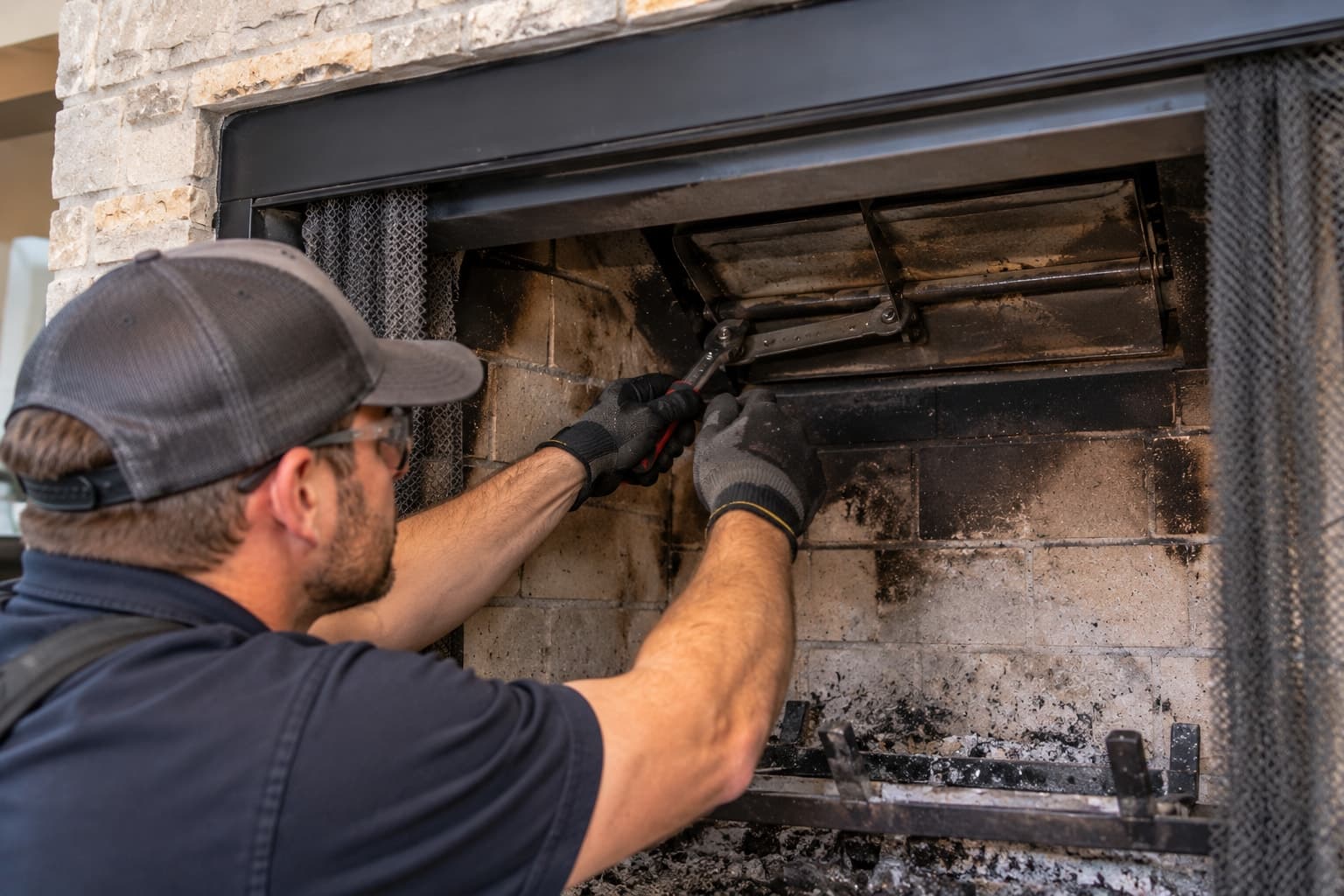
Wind blowing across an open flue works like breath across a bottle, so a low moan or whistle on gusty days is often just the chimney being a pipe. It gets louder when the damper is open, because the flue is then connected to the room. Close the damper, and if the sound drops sharply, the damper was the gap. A damper that won’t close fully, or rattles in its frame, is a job for damper repair.
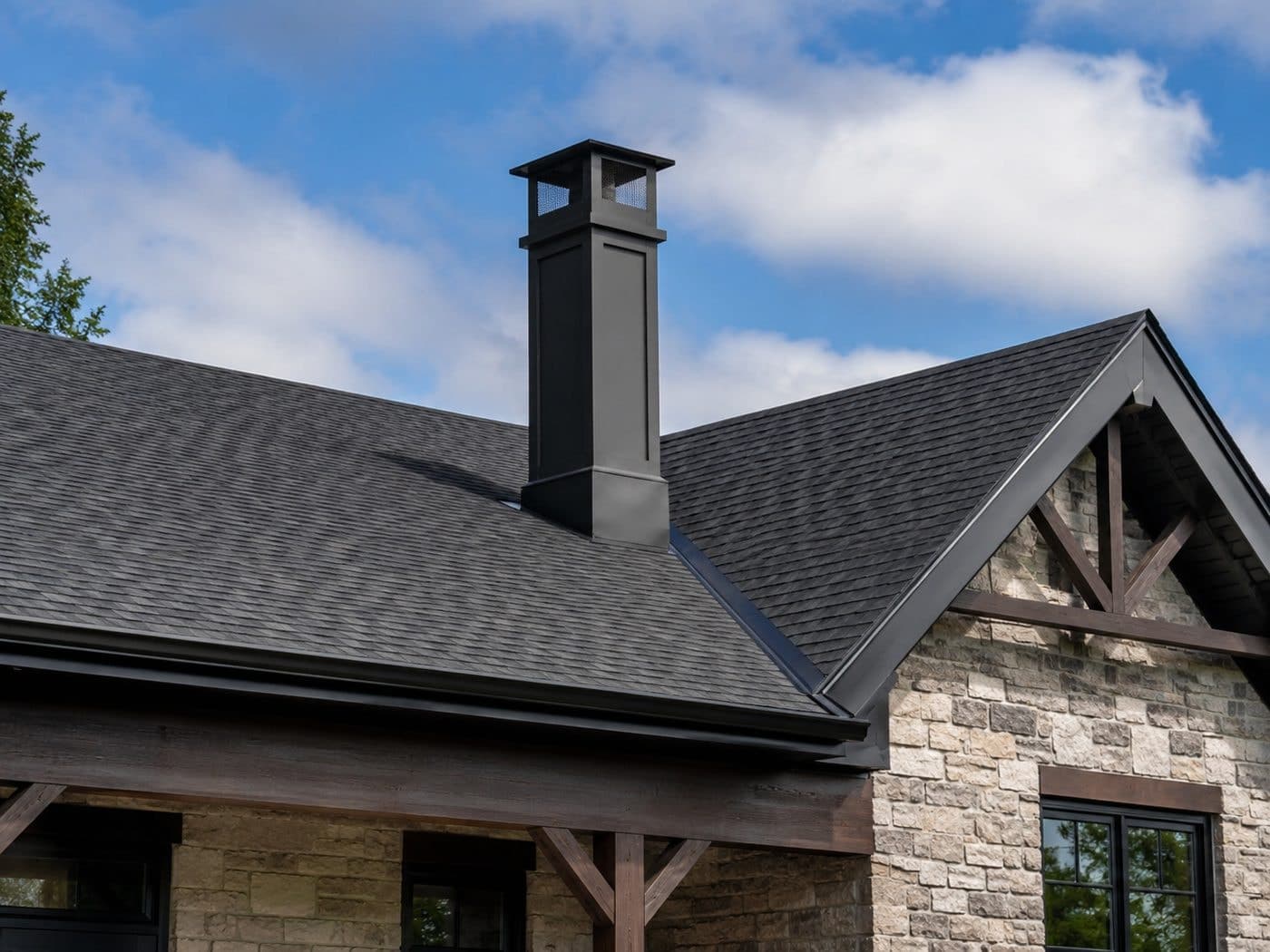
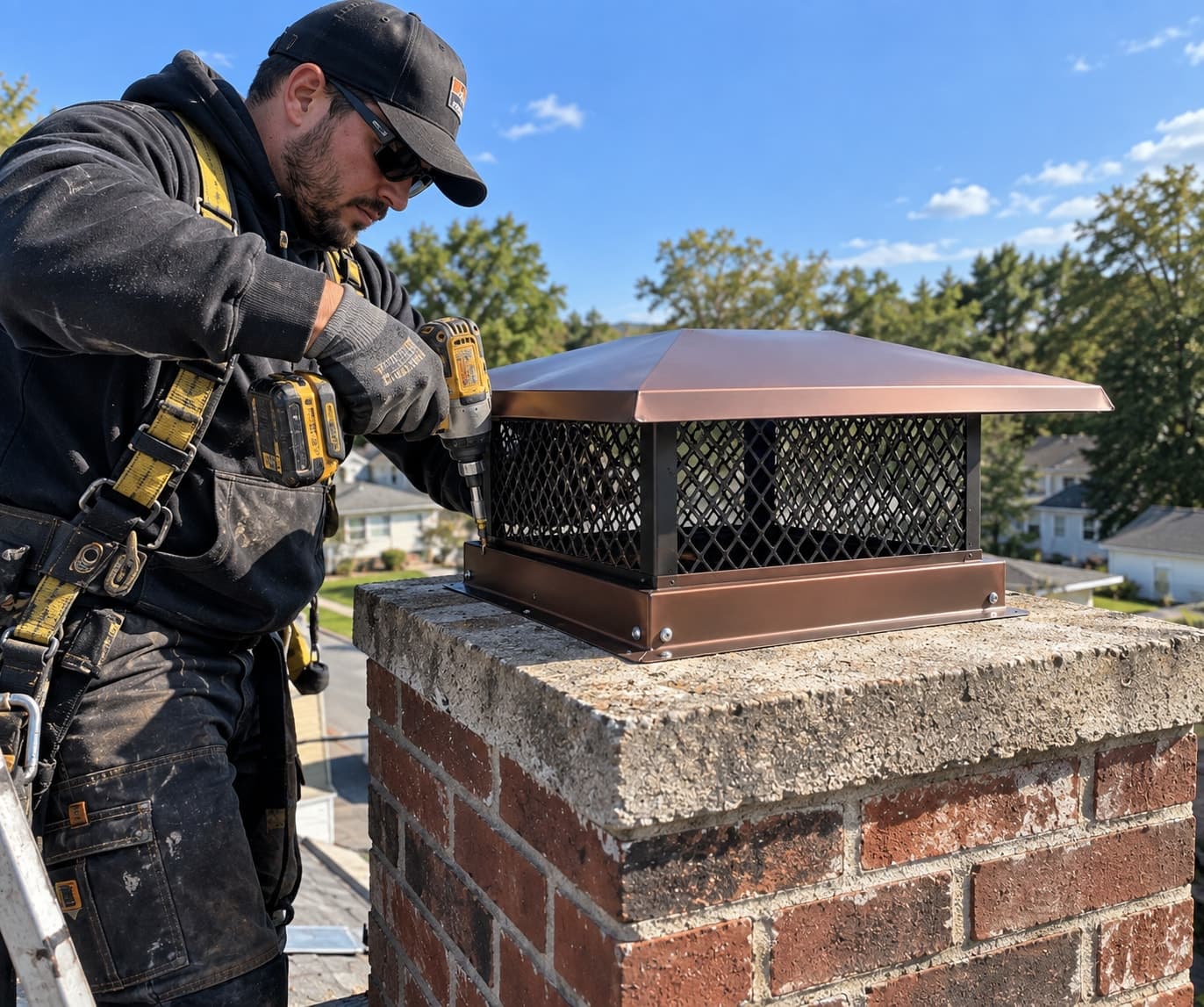
Rattling, clanging or flapping is different: something is loose. On a brick chimney that is usually the cap or its mesh. On a framed chase it can be the flat metal chase cover, the termination cap on the metal flue, or the storm collar that sits around the pipe where it passes through the cover. Cap designs vary, and some sing more than others in wind; a properly fitted and fastened chimney cap should not rattle. After a tropical storm, treat new rattling as possible storm damage rather than a nuisance.
Factory-built fireplace and chimney chase, cutaway
- 1Termination cap. The listed cap on top of the metal chimney pipe.
- 2Storm collar. Sealed band around the pipe that sheds water onto the chase cover.
- 3Chase cover. Sheet-metal top of the framed chase. Should slope, with a raised collar and drip edge.
- 4Chase. The wood-framed box, finished in siding or stucco, that encloses the chimney pipe.
- 5Chimney pipe. Listed metal flue sections made for this specific fireplace model.
- 6Fireplace unit. The factory-built metal firebox, tested and listed as one system with its chimney.
- 7Refractory panels. Molded liner panels lining the unit's firebox. Replaced only with listed parts.
Ticking, popping and dripping
Factory-built fireplaces and framed chimney chases are common in many newer Orlando-area homes. Their flues are made of metal sections, and metal grows slightly as it heats and shrinks as it cools. Some ticking or pinging during a fire and for a while afterward is normal. What isn’t normal is a new bang, a sound that comes with a smoke smell in the chase or upstairs, or a noise from a pipe that has visibly shifted. Those point to separated sections, a damaged firestop or a bent flue, and they are covered by prefab chimney and chase repair.
Tapping or dripping during rain means water is getting in at the top. It may be striking the damper, the smoke shelf or a metal flue pipe. Rust flakes on the damper or firebox floor confirm it. Start with the page on water coming through the chimney, because the fix depends on where the water enters.
Possible causes, most likely first
What a noisy chimney usually comes down to
01Missing, damaged or loose cap
- What you may notice
- Rattling in wind, animal sounds, leaves or twigs landing on the damper, rain tapping inside the flue.
- How it’s confirmed
- From the roof: whether a cap is present, sized to the flue, fastened, and whether the mesh is intact.
02Nest or debris in the flue
- What you may notice
- Chirping, rustling, twigs in the firebox, a musty or sour smell, poor draft when a fire is lit.
- How it’s confirmed
- Light check from the firebox, then a check from the top once any wildlife timing rules are satisfied.
03Damper that doesn’t seal or is loose
- What you may notice
- Whistling or moaning that fades when you close the damper, a handle that flops, air moving at the opening.
- How it’s confirmed
- Operating the damper, looking at the blade, frame and seal for rust, warping or broken parts.
04Loose chase cover or storm collar
- What you may notice
- Metallic banging on windy days on a framed chimney, sometimes with rust streaks down the siding.
- How it’s confirmed
- Roof inspection of the cover’s fasteners and seams and the collar around the metal flue.
05Metal flue expansion
- What you may notice
- Ticking during and after fires in a factory-built fireplace, with no smoke smell or visible damage.
- How it’s confirmed
- Checking the flue sections, joints and supports; only a problem if parts have shifted or separated.
Safe checks you can do
Before you call anyone
- Keep a short log: sound, time of day, weather, and how long it lasted.
- Close the damper and any glass doors. Note whether the noise changes.
- From the ground, look at the top of the chimney with binoculars: is there a cap, and does anything look bent or lifted?
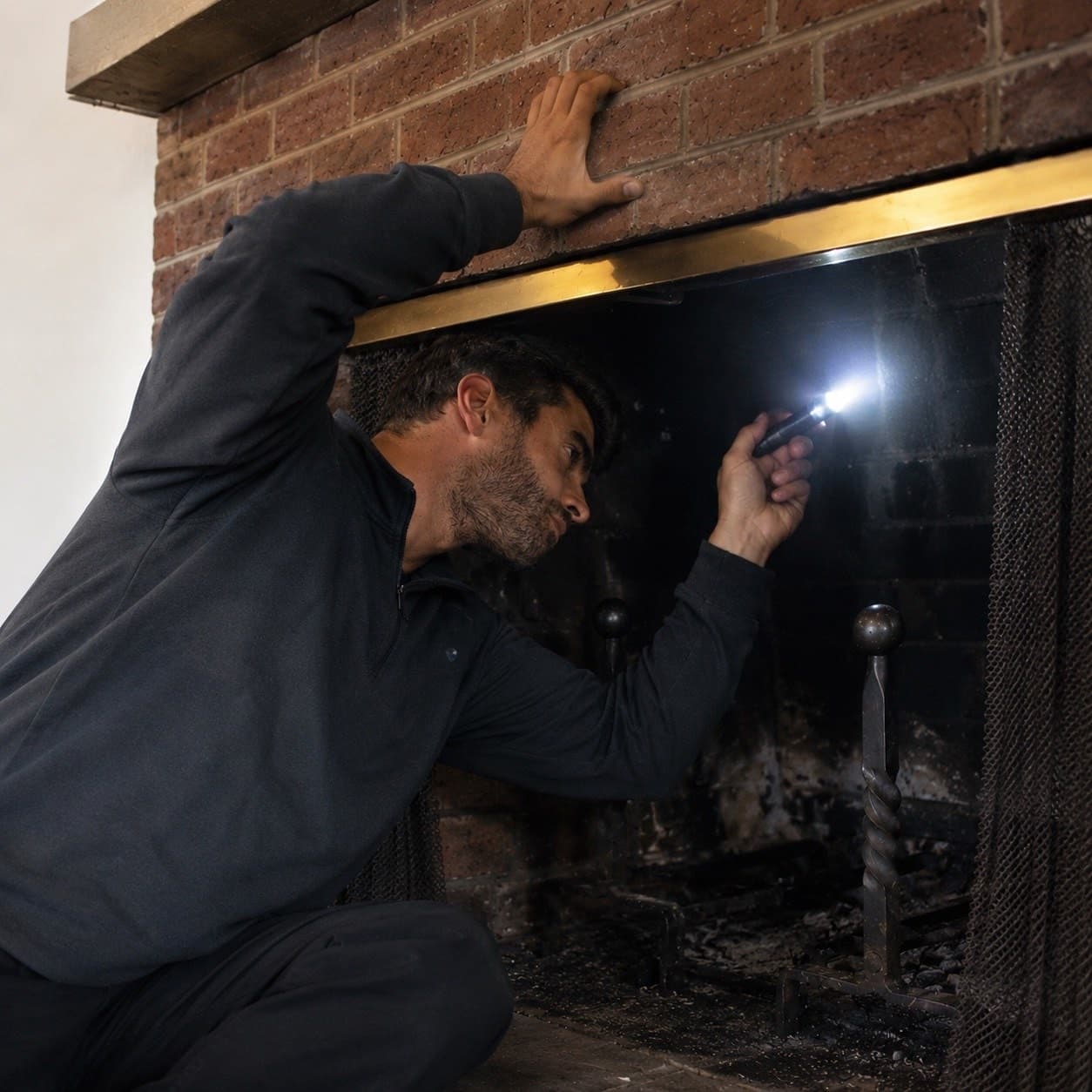
- Shine a flashlight onto the firebox floor and damper for twigs, droppings, rust or water, without reaching up into the flue.
- At dusk in warm months, watch the chimney top for a few minutes. Swifts funnel in at sunset; bats stream out.
- If it’s a gas fireplace, note whether the sound happens only when the unit is running.
Red flags
- An animal, or the sound of one, inside the firebox or behind the fireplace doors: keep them shut and stay out of the room with pets.
- A rotten smell following scratching that has stopped: an animal may have died in the flue or chase.
- Loud banging from a metal chimney, or a smoke smell upstairs during a fire: stop using the fireplace until it is checked.
- Metal pieces, mesh or chunks of cap on the roof or in the yard after wind.
- Clicking or whooshing that happens only when a gas fireplace runs is an appliance issue, not a chimney noise; see a gas fireplace that won’t light and use a qualified gas technician for any gas-side work.
What professional diagnosis involves
Rule out wildlife first
Your notes on timing and season are compared with the swift and bat calendars. If protected birds or bats may be present, nothing is removed or sealed until the rules allow it, and a live mammal is referred to a nuisance wildlife trapper.
Look from below
The firebox, damper and smoke shelf are checked with a light, and the flue is looked at from the top when needed to spot nests, debris or loose parts.
Look from above
Where the roof is accessible, the cap, crown or chase cover, storm collar and fasteners are checked for anything loose, bent or missing.
Fix the source
Typical outcomes are refastening or replacing a cap, repairing a damper, removing a nest or debris after the season, or securing chase-top metal.
Which sound goes to which service
| Sound | Where it’s fixed |
|---|---|
| Chirping or scratching | wildlife timing first, then blockage removal and a cap |
| Rattling or banging in wind | cap replacement or a loose damper via damper repair |
| Ticking or popping from a metal chimney | prefab chimney repair if it is new or loud |
Birds and animals have their own guides: birds in a chimney and an animal in the chimney. Local: chimney sweeping in Longwood. Where each part sits is shown in the parts of a chimney, labeled.
References (3)
Facts and figures on this page come from these references.