Do this now
The first ten minutes
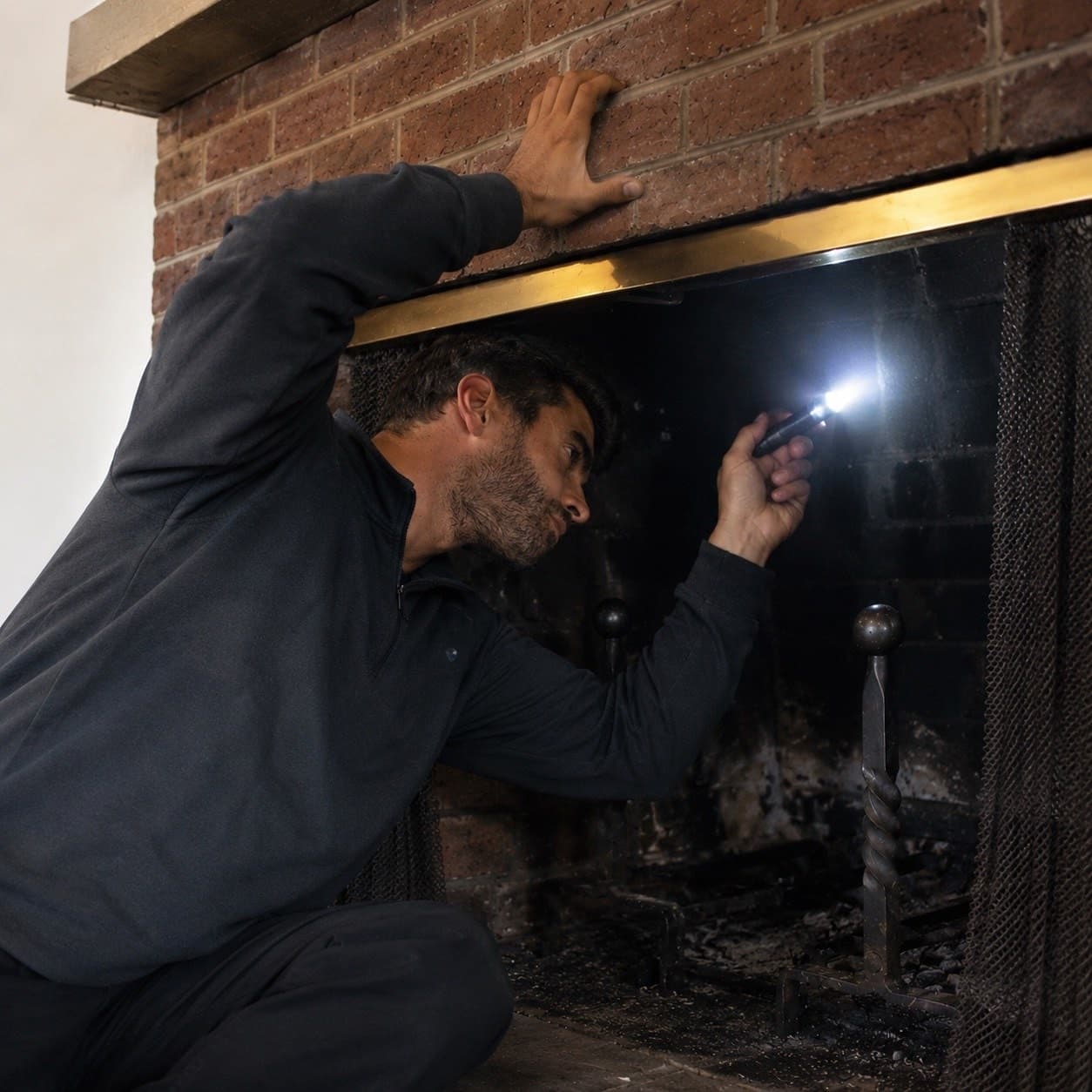
- Close the damper if it closes, and shut the glass doors or put a solid cover over the fireplace opening.
- Keep children and pets out of the room, and close interior doors so an animal that gets into the house stays in one room.
- Don’t light a fire, burn paper or use smoke bombs. Young animals that can’t climb die, nest material can catch fire, and adults may bolt down into the house.
- Don’t reach up the flue or pull out nest material by hand. Raccoons and bats can carry rabies, and a cornered animal bites.
- Note what you hear and when, and look at the chimney top from the ground with binoculars.
If what you hear is chirping in daylight during spring or summer, it is more likely birds than a mammal. That situation has its own rules, covered on the page about birds in the chimney.
Which animal is it?
| Animal | Typical signs | Who deals with the live animal | Timing rules |
|---|---|---|---|
| Raccoon | Heavy thumps and scratching at dusk and night; chittering or crying young; debris on the smoke shelf | Nuisance wildlife trapper | Assume young may be present; they must leave or be removed with the mother |
| Squirrel | Light, quick scurrying in the morning and late afternoon; nuts, leaves or insulation bits | Nuisance wildlife trapper | Young may be present in nesting season |
| Bats | Squeaks and rustling; bats streaming out at dusk; droppings on the hearth or damper | Exclusion by a wildlife professional | Exclusion only Aug 15 to Apr 15; blocking them in during maternity season is illegal |
| Snake | Shed skin, a sighting in the firebox or at the roofline | Nuisance wildlife trapper | Don’t handle; identification from a distance only |
| Lizards and frogs | Small movement in the firebox, often after rain | Usually leave on their own through an open door | None for common species; don’t trap them in the flue |
Raccoons
A masonry chimney with no cap is a ready-made den: dry, dark and hard for predators to reach. The smoke shelf just above the damper is flat enough for a litter. If you hear a raccoon in the chimney in spring or summer, assume a mother with young until someone has looked. Sealing the top with her outside and the kits inside, or removing her and leaving the kits, both end badly. Ask the trapper how the young will be handled before any work starts; the goal is for the whole family to leave together.
Squirrels and rodents
A squirrel that drops into a smooth flue, especially a metal one, may be unable to climb back out. On a framed chimney they are more likely to be inside the chase, having chewed or squeezed through a gap at the chase cover, trim or siding. Scratching inside the wall beside the fireplace, rather than in the firebox, points that way. The entry gap is then part of the repair, not just the flue top.
Bats
Florida’s bats are protected, and the dates matter. FWC sets bat maternity season from April 16 to August 14. During that time it is illegal to block bats from returning to their roost, because flightless pups would be trapped inside. Exclusion devices, which let bats out but not back in, may be used from August 15 to April 15, left up for at least four nights when overnight lows are forecast at 50 °F or above (FWC). The chimney is capped only after the bats are confirmed out.
Snakes, lizards and frogs
Snakes can climb rough brick and occasionally end up in a firebox or chase, usually after prey. Keep your distance and let a trapper identify and remove it. Small lizards and tree frogs sometimes appear in the firebox after wet weather. Open the fireplace doors and a nearby outside door and they tend to leave; the real question is how they got in, which usually means a missing or damaged cap.
Who to call, and what Florida allows
We don’t trap or remove live animals. That is work for a nuisance wildlife trapper. FWC does not license trappers, but it keeps a list of nuisance wildlife trappers who have registered, and it lets property owners deal with nuisance wildlife on their own property within its rules (FWC FAQs). Those rules include releasing live-caught animals legally or euthanizing them humanely within 24 hours, and releasing off-site only with the written permission of the landowner. Bats and federally protected migratory birds can’t be removed as nuisance wildlife without a permit (FWC).
Questions to ask a trapper
Will you check for young and remove them with the mother? How will you get the animal out of this chimney (top, bottom or a one-way door)? Do you handle bats, and which months? Will you tell us where the animal got in, so the chimney can be sealed right after?
A dead animal smell
A sweet, rotten smell that builds over a few days, sometimes after scratching has stopped, usually means an animal has died in the flue, on the smoke shelf or inside a chase. Air fresheners won’t touch it and it gets worse in heat and humidity. The carcass and any contaminated nest material have to come out, and the area is cleaned before the fireplace is used. For odors that don’t fit this pattern, see why a fireplace smells on humid days.
After the animal is gone
Confirm the chimney is empty
A light check of the smoke shelf, damper area and flue, and for framed chimneys a look at the chase top, before anything is sealed.
Remove nests, droppings and debris
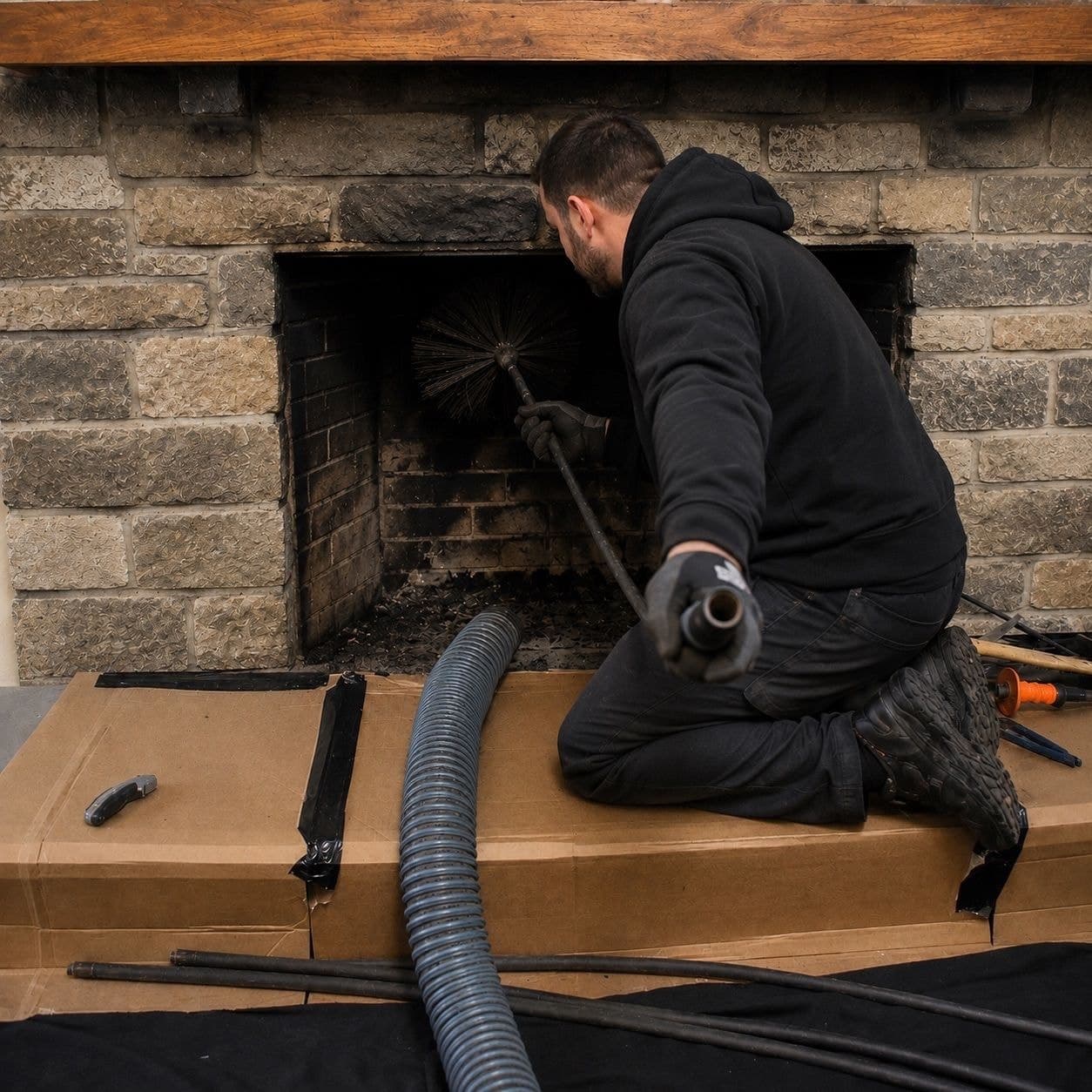
Nest material, leaves, droppings and any remains are removed from the smoke shelf and flue with the room protected. This is part of chimney blockage removal.
Clean the flue
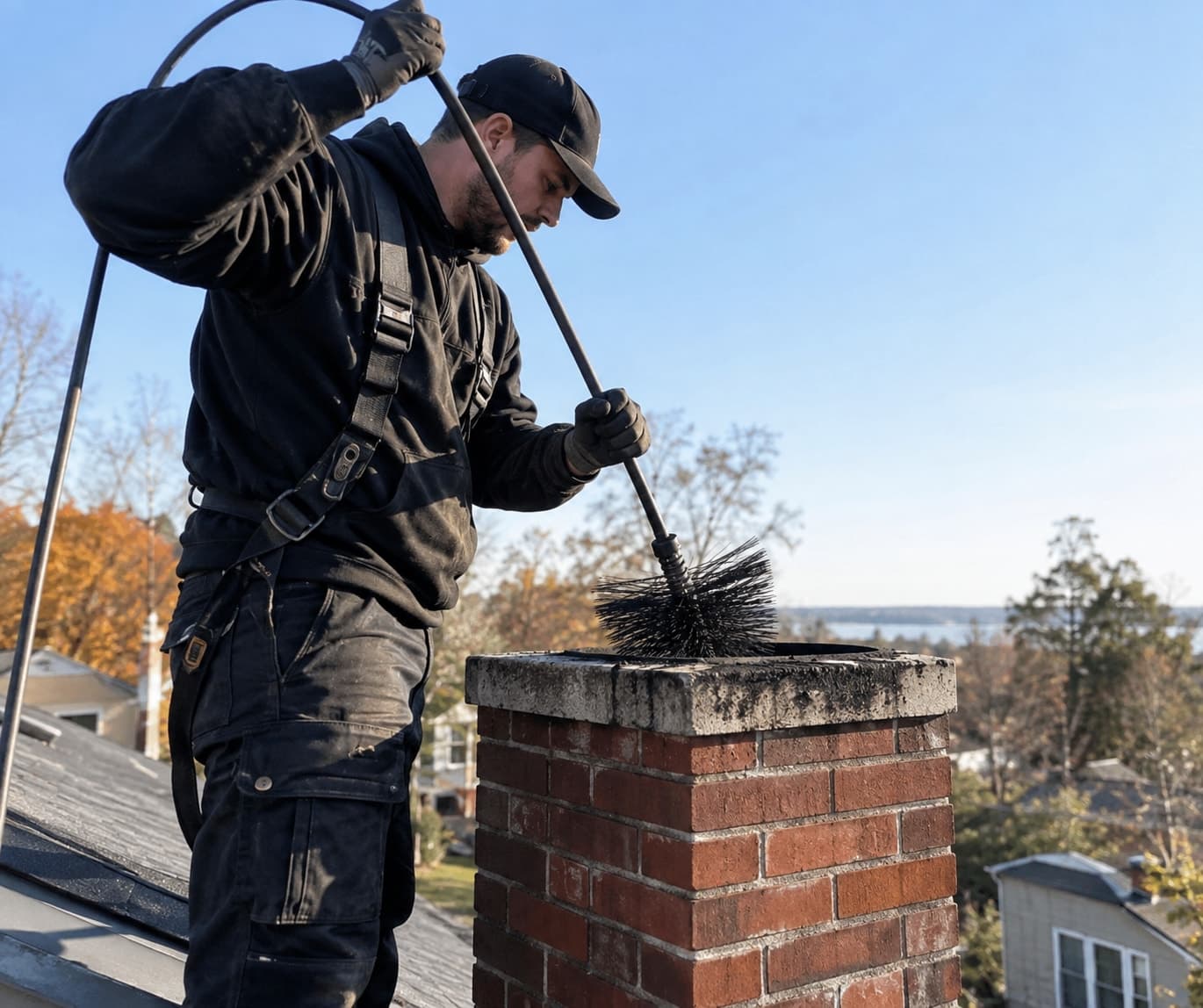
The flue and smoke chamber are brushed so no nest material or droppings are left to smell or burn. A full chimney sweep is the right scope if you use the fireplace.
Close the way in
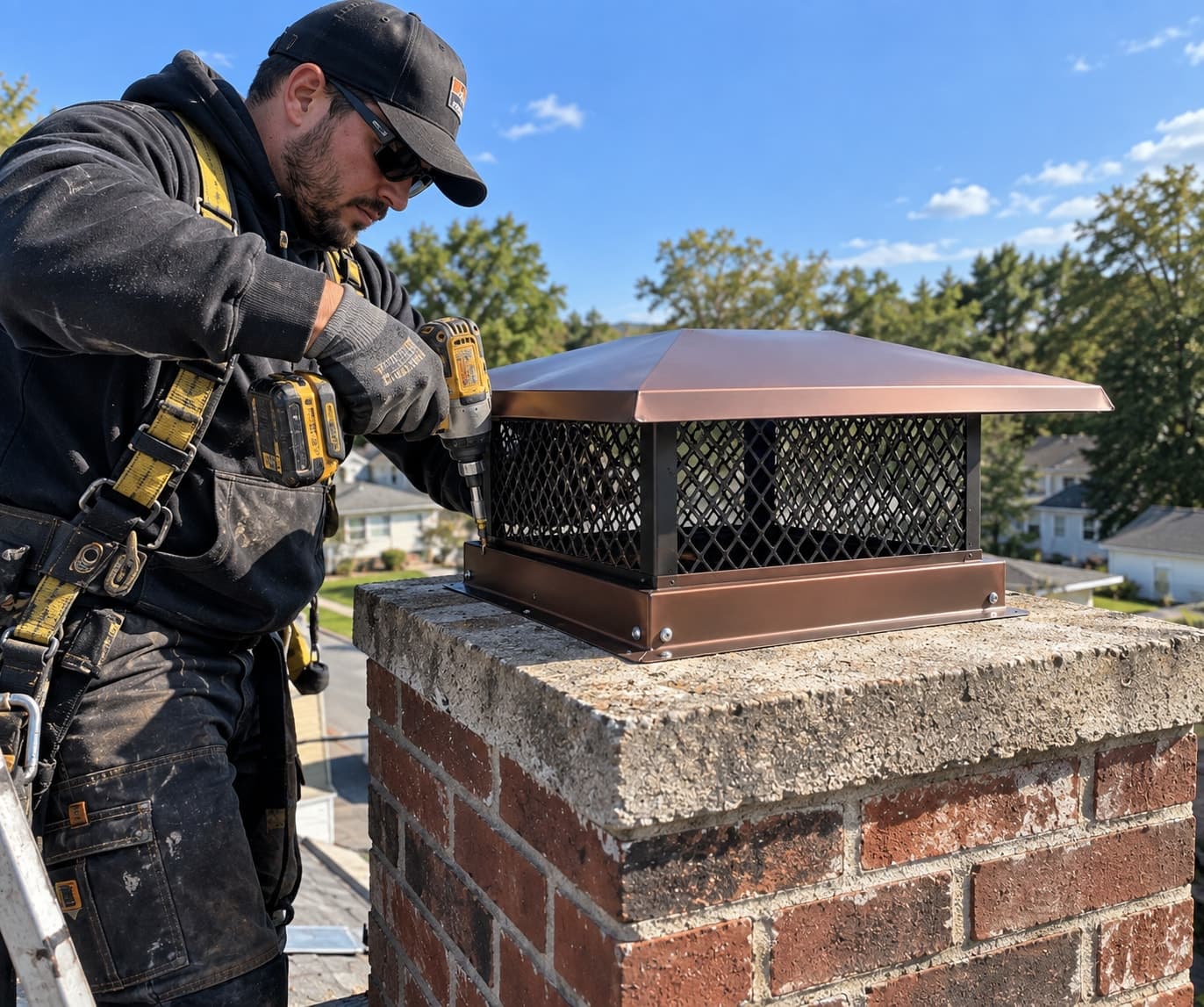
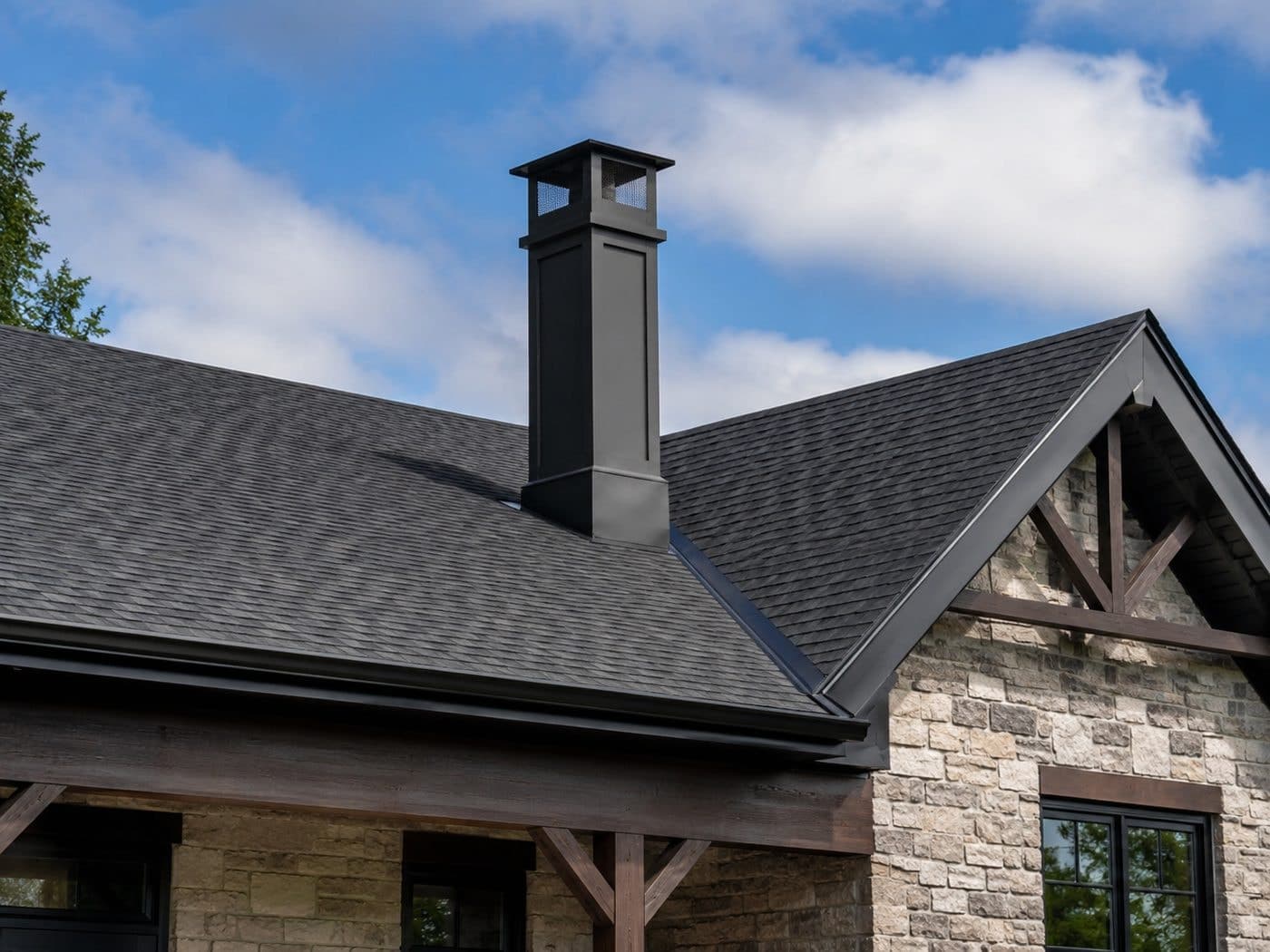
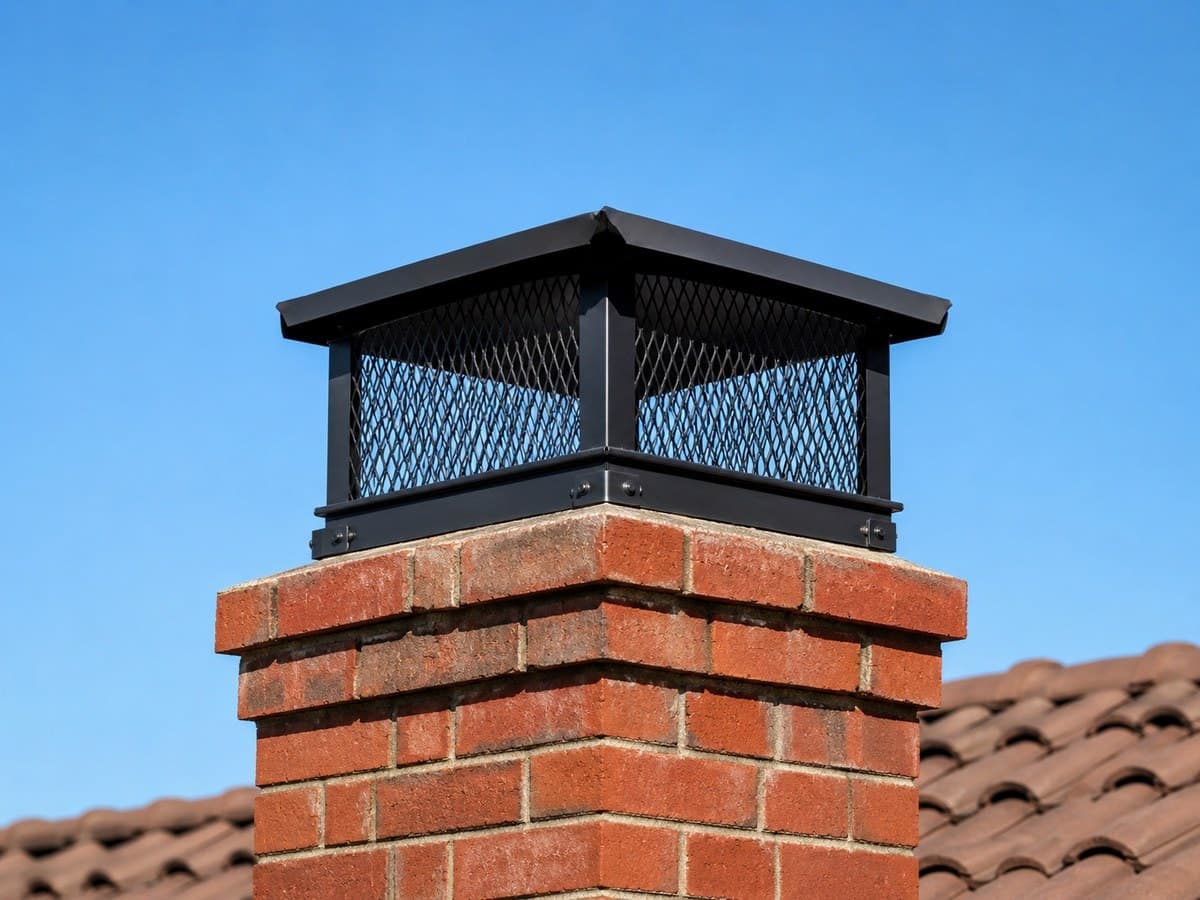
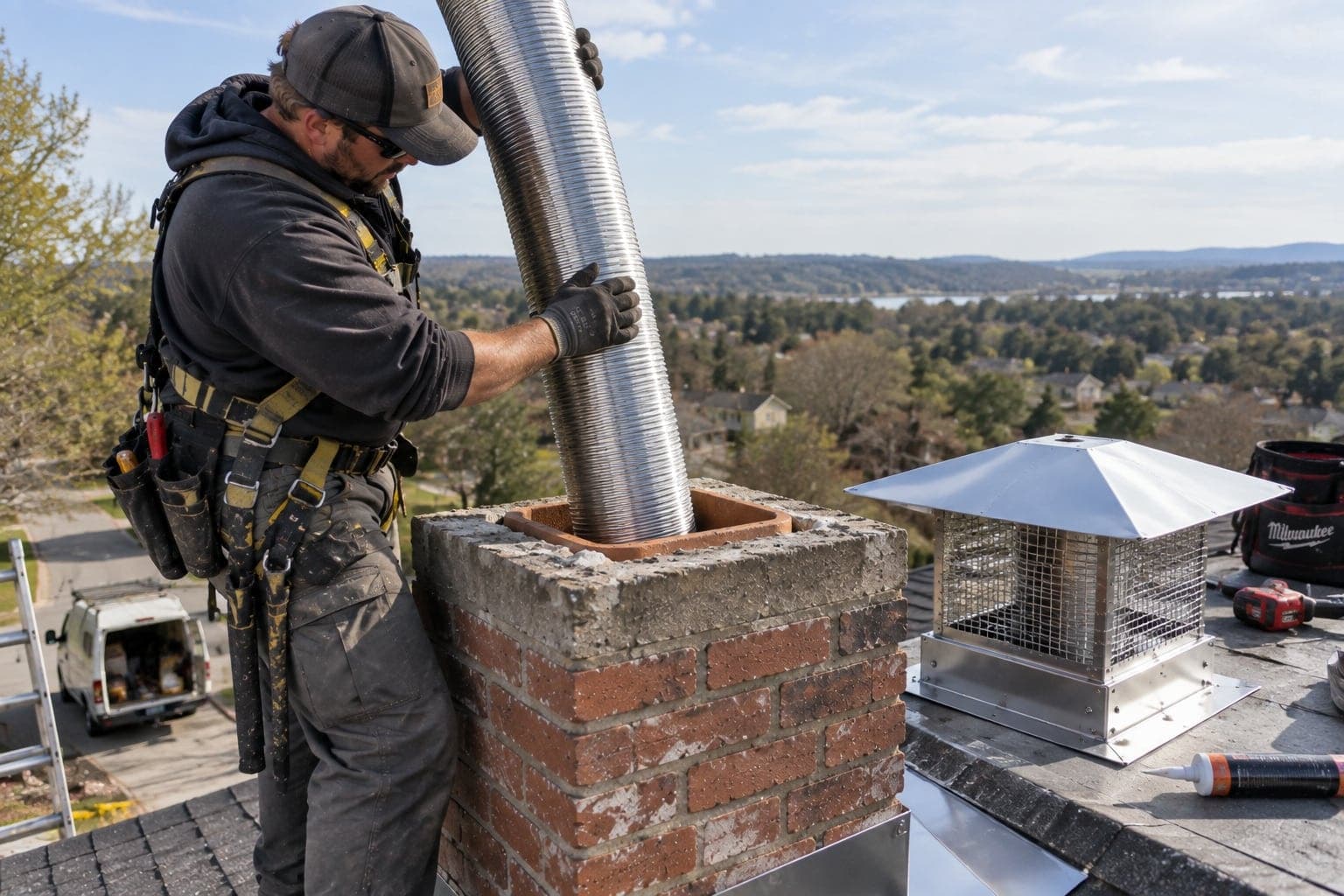
A cap sized and fastened to the flue keeps animals out of a masonry chimney or a metal flue. On framed chimneys, rusted seams or gaps at the chase top are fixed with a new chase cover or trim repair.
Masonry chimney and fireplace, cutaway
- 1Chimney cap. Metal lid with mesh sides over the flue opening. Keeps rain, debris and animals out.
- 2Crown. The concrete or mortar top of the masonry, sloped to shed water away from the flue.
- 3Flue liner. Clay tile or metal lining that carries smoke up and protects the masonry from heat.
- 4Flashing. Metal that seals the joint between the chimney and the roof.
- 5Brick & mortar. The chimney structure. Mortar joints and brick faces absorb water when they wear.
- 6Smoke chamber. The sloped transition that funnels smoke from the firebox into the flue.
- 7Damper. Metal plate at the throat (or a sealing lid on top) that closes the flue when not in use.
- 8Firebox. Where the fire burns. Firebrick laid in heat-resistant mortar.
- 9Hearth. Non-combustible floor extension in front of the fireplace opening.
Possible entry points, most likely first
01No cap, or a cap with torn mesh
- What you may notice
- Animals in the flue itself, leaves and twigs on the damper, rain inside.
- How it’s confirmed
- Roof check of the cap, its mesh and fasteners, and whether it fits the flue.
02Gaps at the chase top
- What you may notice
- Scratching inside the wall beside a factory-built fireplace, rust on the chase cover, loose trim.
- How it’s confirmed
- Roof check of the cover seams, edges and storm collar, and the siding and trim at the top of the chase.
03Siding or trim damage lower on the chase
- What you may notice
- Chewed or rotted boards, holes where the chase meets the roof.
- How it’s confirmed
- Probing trim and siding for rot and openings.
Red flags
- An animal loose in the house: leave the room, close the door and open an outside door or window in that room if it’s safe.
- A bite or scratch, or bat contact with anyone asleep: contact your doctor or the county health department promptly.
- Smoke backing into the room on the first fire after an animal visit: nest material may still be in the flue; see smoke coming into the room.
- Repeated visits despite a cap: the cap may be the wrong size, loose, or the animals are using the chase instead.
What happens once the animal is out
| What’s needed | Where it’s fixed |
|---|---|
| Nesting material, droppings and debris | removal of nests and debris |
| Lingering odor | a sweep and, if needed, odor removal |
| Keeping the next one out | an animal screen or a new cap |
Live animals are handled by a nuisance wildlife trapper, not a chimney company; birds have their own rules in birds in a chimney. Local: chimney cleaning in Apopka. What a cap and a chase cover each keep out explains which one your chimney needs.
References (4)
Facts and figures on this page come from these references.