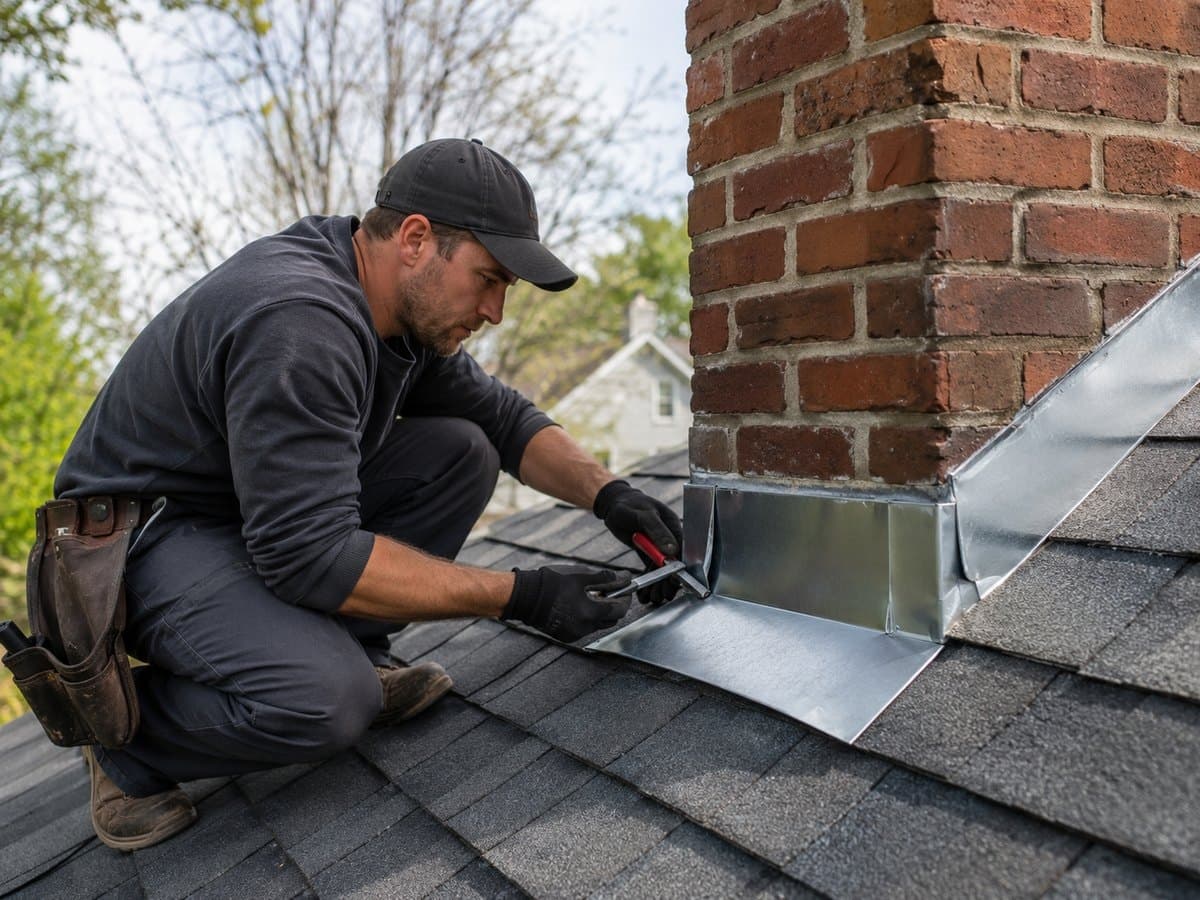
In Longwood, a 1970s brick chimney and a 2000s framed chase can sit a few streets apart, and they leak in different places. Here’s what that means for leaks.
The usual leak sources
01Flashing
- What you may notice
- Stains next to the chimney on the ceiling or wall, often after wind-driven rain.
- How it’s confirmed
- Step and counter-flashing are checked where the roof meets the chimney.
02Crown or cap
- What you may notice
- Water inside the firebox or at the top of the fireplace opening.
- How it’s confirmed
- The crown surface, the gap around the flue tile and the cap are checked from the roof.
03Chase cover
- What you may notice
- Rust streaks on the siding, water in a factory-built firebox.
- How it’s confirmed
- The cover is checked for dishing, rust and the seal at the storm collar.
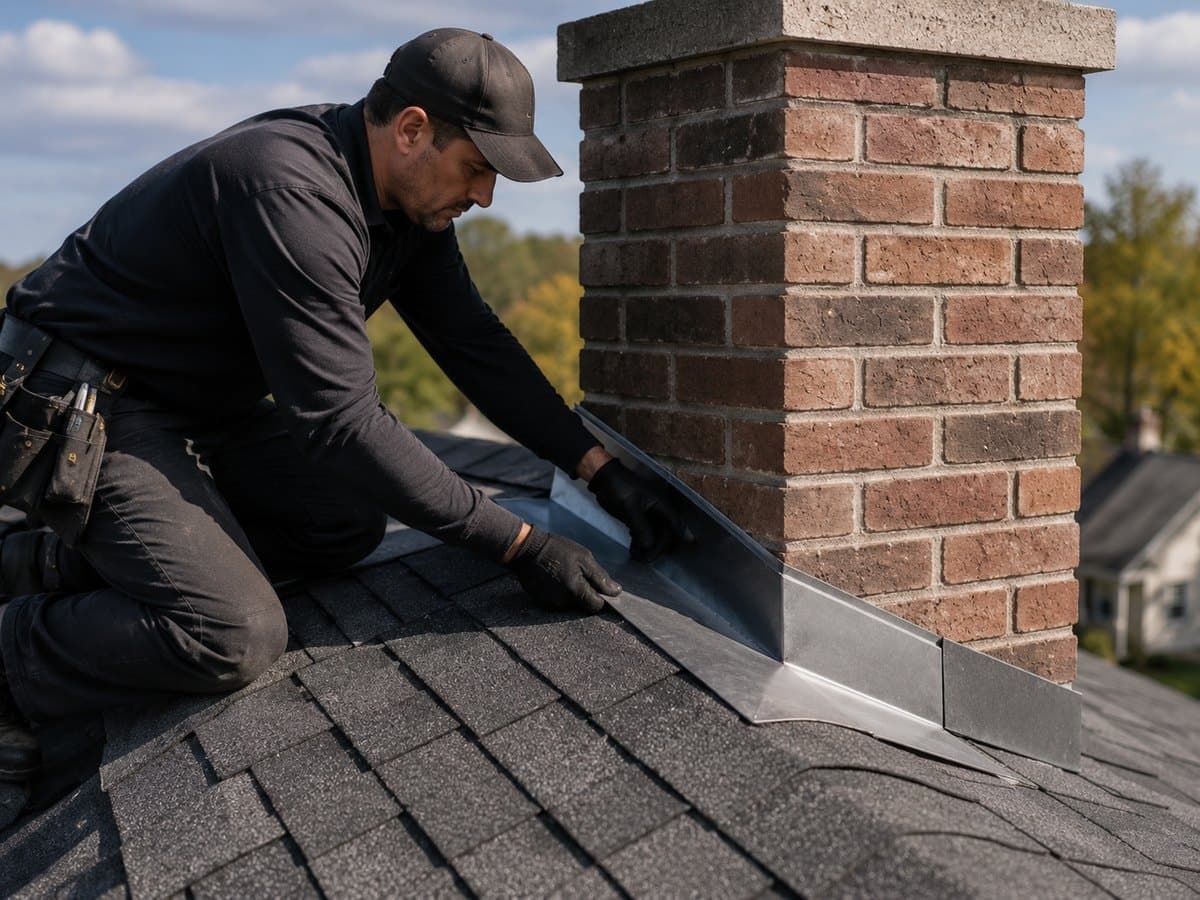
Why Longwood chimneys let water in
On the 1970s brick chimneys, the crown and flashing are the usual entry points; on newer chases, the cover and storm collar. Identifying which system you have is the first step.
Reading where the water shows up
| Where you see water | Often points to | Checked first |
|---|---|---|
| Ceiling or wall beside the chimney | Water at the roof line | Flashing and any cricket |
| Inside the firebox or on the damper | Water coming down the flue | Cap, crown or storm collar |
| High on the chimney breast | Water through the brick or crown | Crown and mortar joints |
| Rust streaks down a chase | Water pooling on the chase top | Chase cover |
Water can travel before it shows, so this is a starting point; see what ceiling stains near a chimney mean.
Repair or waterproofing?
| Feature | Repairing the source | Water repellent |
|---|---|---|
| Fixes | Failed flashing, cracked crowns, missing caps, rusted covers | Brick that absorbs too much rain |
| When | First, always | Only after the masonry is sound |
| Won’t fix | — | Flashing, crown, cap or chase cover leaks |
Fixes
- Repairing the source
- Failed flashing, cracked crowns, missing caps, rusted covers
- Water repellent
- Brick that absorbs too much rain
When
- Repairing the source
- First, always
- Water repellent
- Only after the masonry is sound
Won’t fix
- Repairing the source
- —
- Water repellent
- Flashing, crown, cap or chase cover leaks
Waterproofing doesn’t solve every chimney leak. Applying breathable water repellent reduces how much rain brick soaks up, but only once the actual entry points are repaired.
If the repair changes the exterior
The Longwood Historic District is on the National Register; ask the City of Longwood whether review applies before rebuilding a crown or changing brick or mortar.
Leak repair or chimney repair?
This page is about water getting in. If the chimney is cracked, crumbling, leaning or storm-damaged, that’s chimney repair in Longwood, and a leak repair may be part of it. When you’re not sure, start with an inspection in Longwood.
Leak repair across Longwood
Leak tracing and repair are available anywhere in Longwood, including Longdale. When you get in touch, say where the water shows up and in what kind of weather. For the rest of the house, see everything we handle across Longwood. The same service covers leak diagnosis and repair in Altamonte Springs, help with chimney water entry in Lake Mary and service for leaking chimneys in Winter Springs.
Related repairs that often come up: resetting failed flashing, chimney crown work and a new chase cover.
More detail: how each leak source is confirmed, plus what rust below the chase cover means.
References (3)
Figures for Longwood and the references used on this page.