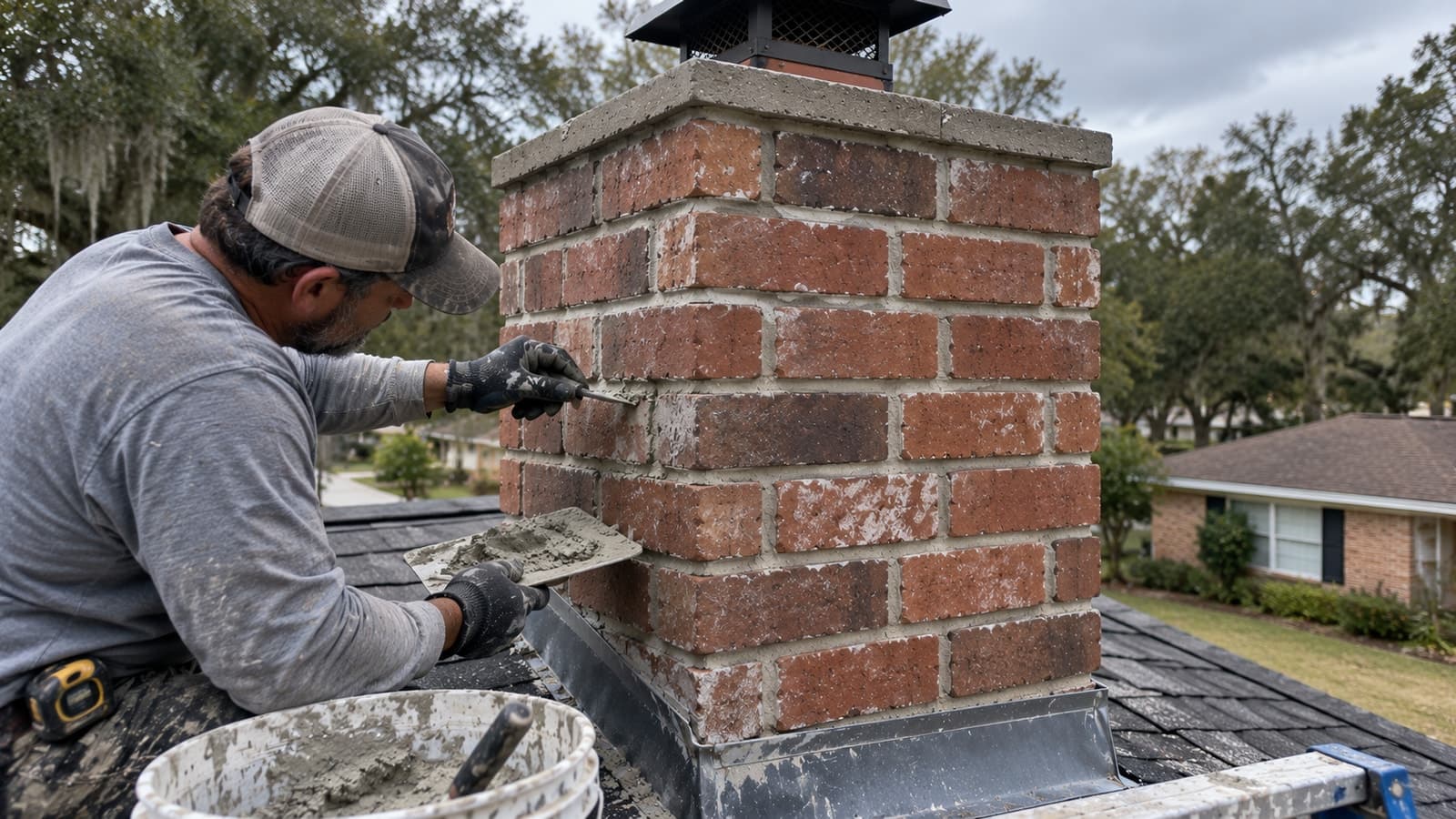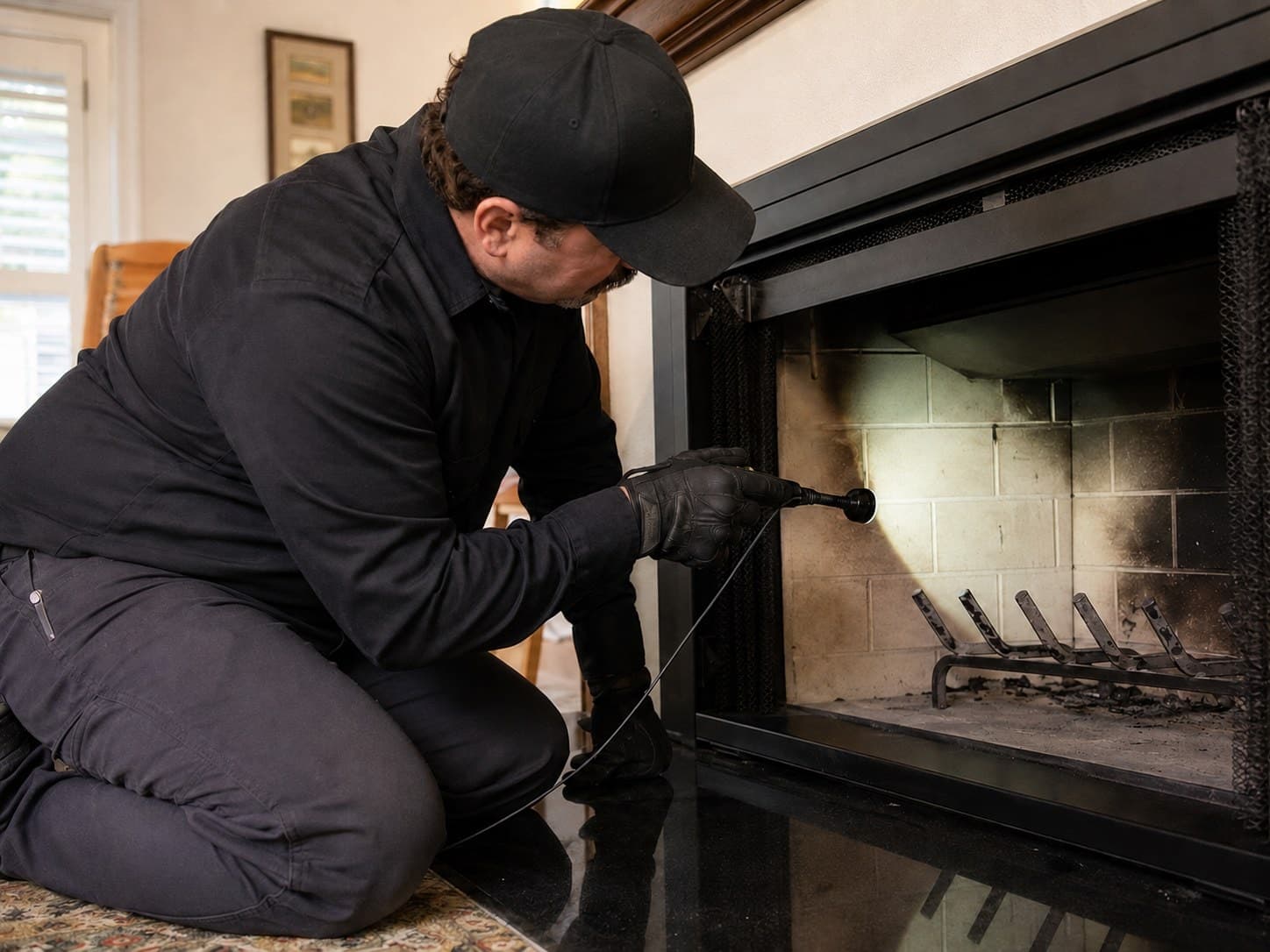
Clermont is Lake County’s largest city, and 75.8% of its homes date from 2000 or later, so most chimneys are framed chases with a metal flue. Knowing that helps plan the visit.
Part by part: what the inspector looks for
| Part | What’s looked for | Why it matters |
|---|---|---|
| Flue / liner | Cracked or offset tile, gaps, rusted or separated pipe | Heat and smoke must stay inside the flue |
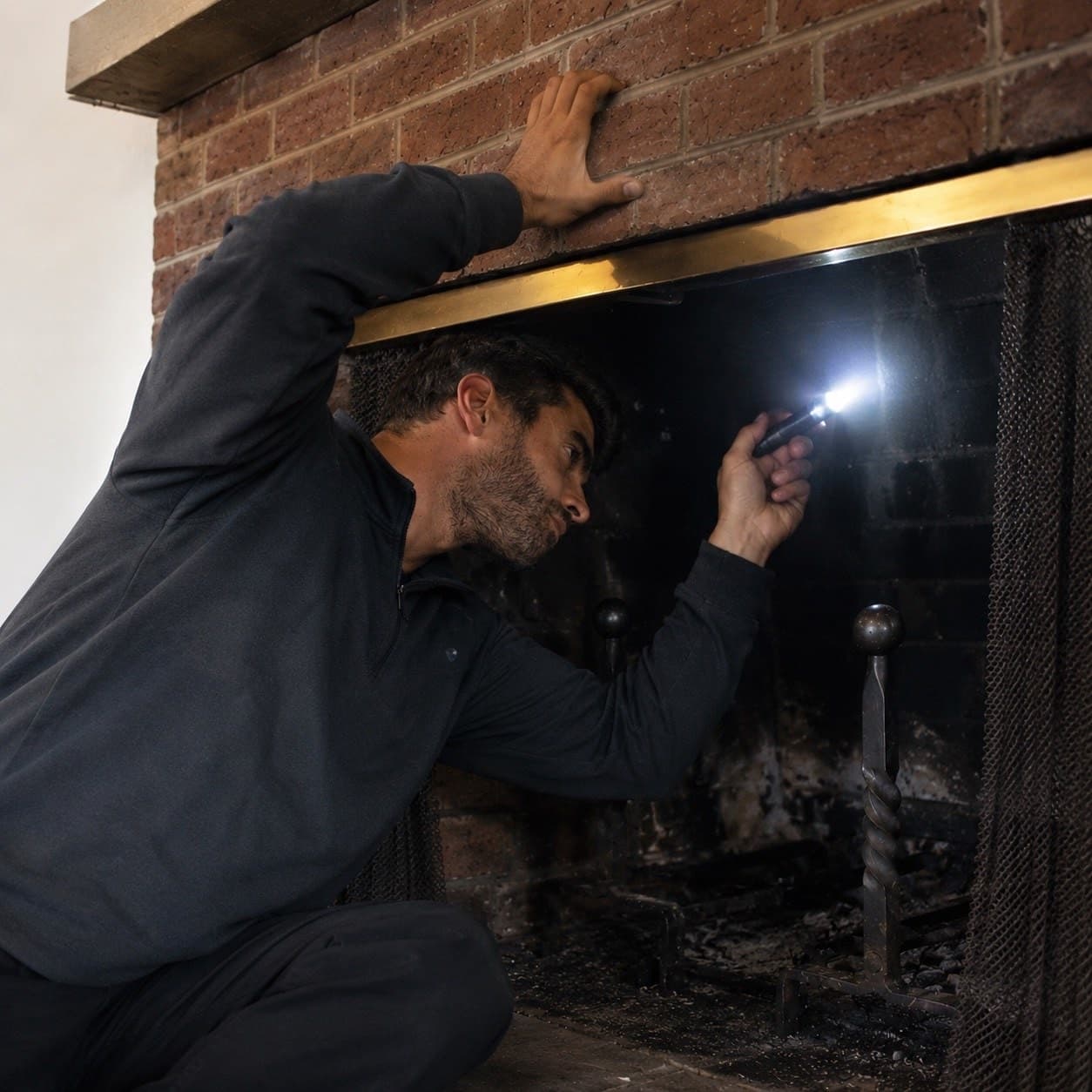
| Firebox and damper | Cracks, loose brick or panels, a damper that won’t seal | The parts that take the fire directly |
| Smoke chamber and smoke shelf | Rough or crumbling walls, debris, nesting material | Blockages and smoke spillage start here |
| Crown, cap, flashing | Cracks, missing cap, lifted or caulked flashing | Where most water gets in |
| Masonry or chase | Eroded joints and spalling, or rust and soft siding | Shows how long water has been getting in |
| Gas fireplace venting | A blocked or damaged vent, termination or cap | Exhaust has to leave the house |
Clermont homes and their chimneys
The area ranks among the most lightning-dense in the country, and a metal flue in a chase is often the highest point on the roof. After a nearby strike, an inspection checks the flue sections, cap and chase before the next fire. Outdoor fireplaces are inspected too; whether one can be used is up to the city fire department, Florida Forest Service burn restrictions and HOA rules.
Where this page applies
Many communities with Clermont addresses are unincorporated Lake County; this page follows the city’s verified list.
Three reasons people call
Most inspections in Clermont are routine: a yearly check, a fireplace about to be used again, or a question about water or smoke. Two situations have their own visits because they’re timed and scoped differently. A sale has an inspection period and a buyer to answer to, so it has the inspection built around a sale. After a named storm, what matters is what changed, which is the job of a check for storm and lightning damage.
NFPA 211 calls for chimneys, fireplaces and vents to be inspected at least once a year (NFPA 211), whichever situation you’re in.
What counts as a safety finding
- Cracked, missing or displaced flue tile, or separated metal flue sections
- A blocked flue or a smoke shelf full of debris
- Cracks or gaps in the firebox that expose the brick or metal behind
- Loose brick at the top of the chimney
- Signs of heat damage or a past chimney fire
These mean the fireplace shouldn’t be used until they’re repaired. Questions about the fireplace alone, such as doors or glass, can go to a fireplace-only inspection instead.
What happens after the inspection
If everything is sound, nothing else is needed until next year. If the flue needs cleaning, flue sweeping comes first. Cracks, loose brick or a failed crown lead to repair for cracked or damaged masonry; water getting in leads to the leak repair service. Nothing is scheduled until you’ve decided.
Inspections around Clermont
- Anywhere in Clermont, including King's Ridge: mention the fireplace type and what prompted the inspection
- Nearby: inspection visits in Minneola, Groveland chimney and flue checks and inspecting chimneys in Montverde
- Everything else for the house: services for homes in Clermont
More detail: what each inspection covers, plus what a home inspection checks on the flue.
References (2)
Where the Clermont numbers and code references come from.