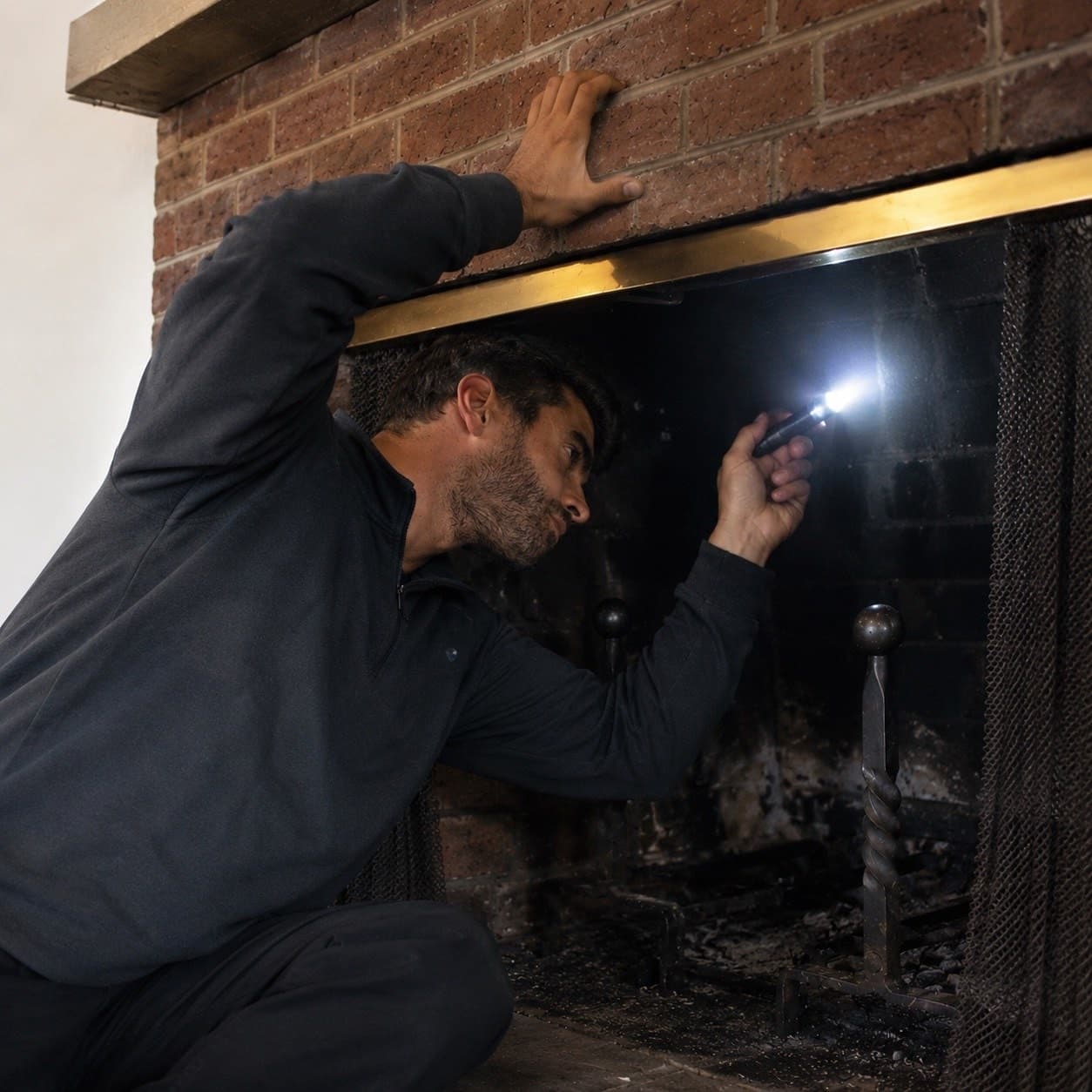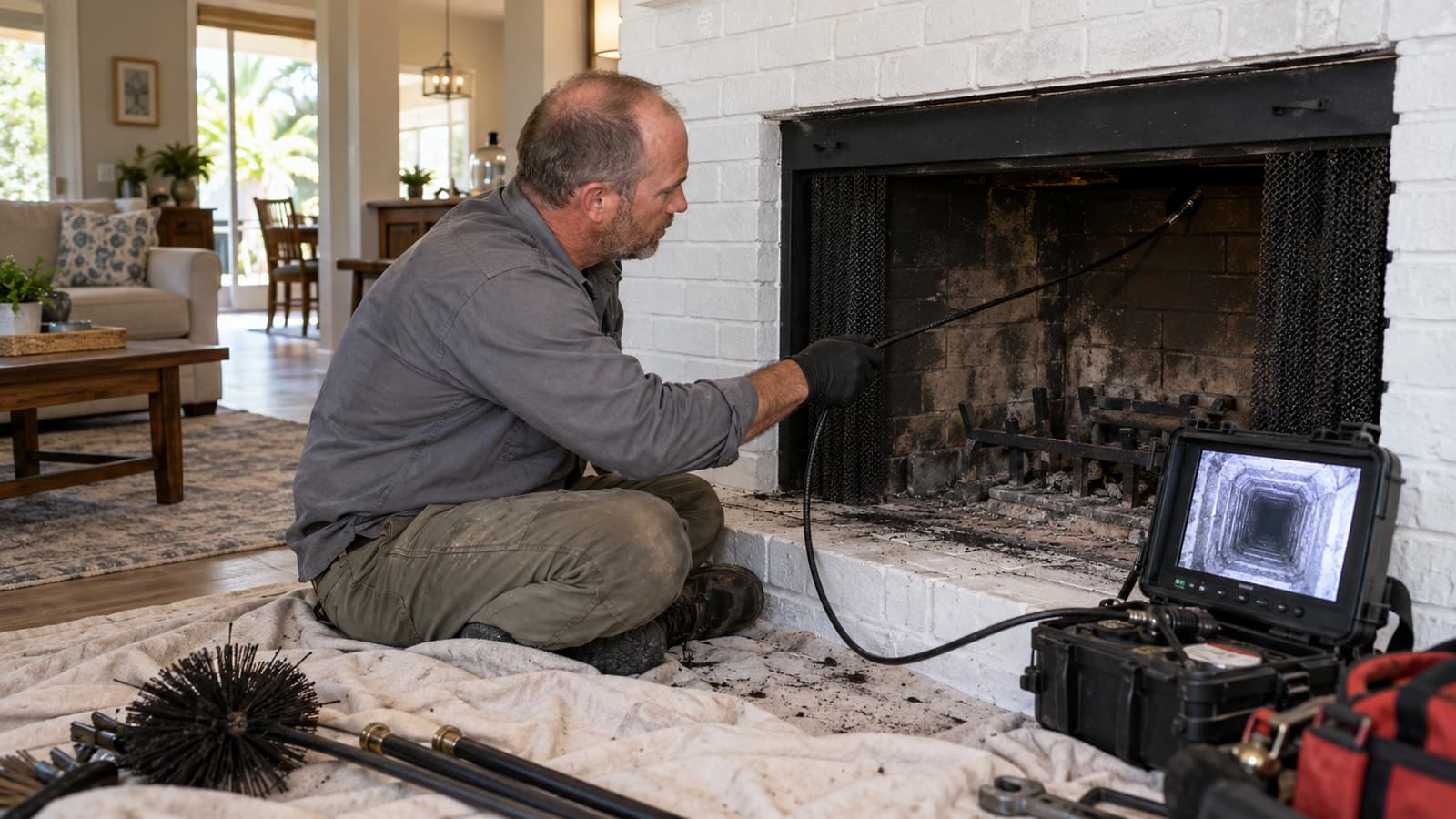
Lady Lake’s housing is mostly from the 1980s and 1990s (63.8%), and about 31% of homes are manufactured homes. That decides what an inspection here looks at first.
Part by part: what the inspector looks for
| Part | What’s looked for | Why it matters |
|---|---|---|
| Flue / liner | Cracked or offset tile, gaps, rusted or separated pipe | Heat and smoke must stay inside the flue |
| Firebox and damper | Cracks, loose brick or panels, a damper that won’t seal | The parts that take the fire directly |
| Smoke chamber and smoke shelf | Rough or crumbling walls, debris, nesting material | Blockages and smoke spillage start here |
| Crown, cap, flashing | Cracks, missing cap, lifted or caulked flashing | Where most water gets in |
| Masonry or chase | Eroded joints and spalling, or rust and soft siding | Shows how long water has been getting in |
| Gas fireplace venting | A blocked or damaged vent, termination or cap | Exhaust has to leave the house |
The local picture in Lady Lake
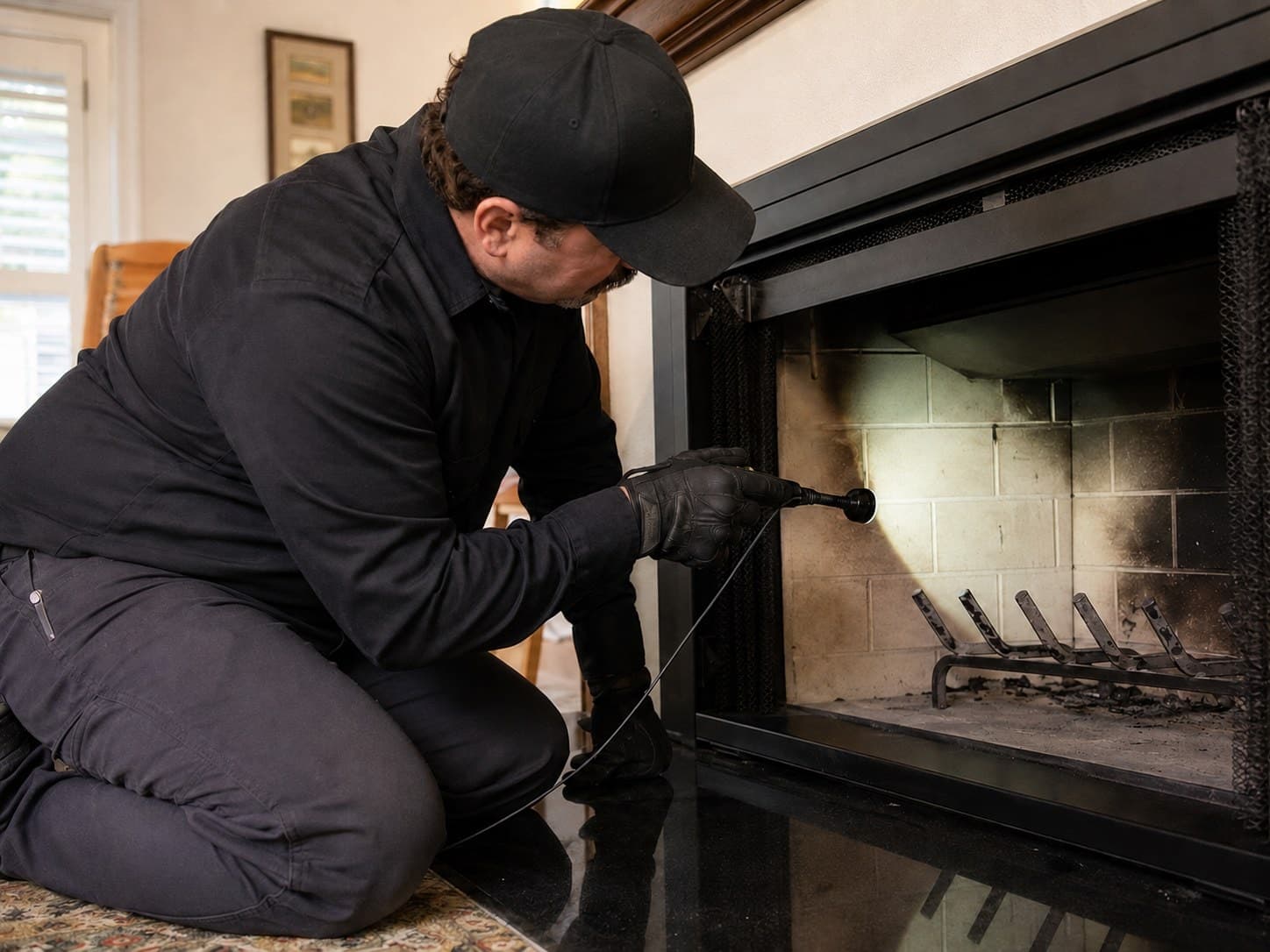
Fireplaces that are used after sitting for months are the typical case here, so the inspection also looks for nests and debris that settled during the idle season, and on manufactured homes confirms listed parts, doors and outside air.
When to book an inspection
- Once a year, as NFPA 211 recommends, whether or not the fireplace is used much
- Before the first fire in a house that’s new to you, or a fireplace idle for years
- When water, rust, stains or a musty smell show up; see the common causes of chimney water
- After a hurricane, tropical storm or nearby lightning: an inspection after hurricane or wind damage
- During a purchase or before listing: a pre-purchase or pre-listing chimney inspection
Chimney inspection or fireplace inspection?
| Feature | Chimney inspection | Fireplace inspection |
|---|---|---|
| Scope | The whole system: firebox to cap, flue included | The fireplace itself: firebox, damper, doors, surround |
| Best for | Yearly checks, water or smoke problems | A fireplace-specific question or a door or glass issue |
| Safety answer | Whether the whole system is safe to use | Whether the fireplace itself is safe to use |
Scope
- Chimney inspection
- The whole system: firebox to cap, flue included
- Fireplace inspection
- The fireplace itself: firebox, damper, doors, surround
Best for
- Chimney inspection
- Yearly checks, water or smoke problems
- Fireplace inspection
- A fireplace-specific question or a door or glass issue
Safety answer
- Chimney inspection
- Whether the whole system is safe to use
- Fireplace inspection
- Whether the fireplace itself is safe to use
If the question is only about the fireplace, fireplace inspection is narrower. When in doubt, the chimney inspection covers both.
What happens after the inspection
If everything is sound, nothing else is needed until next year. If the flue needs cleaning, a chimney sweep comes first. Cracks, loose brick or a failed crown lead to the local repair service; water getting in leads to tracing and fixing the leak. Nothing is scheduled until you’ve decided.
Chimney inspections across Lady Lake
Inspections are available throughout Lady Lake, from Orange Blossom Gardens to the newest streets. Tell us what kind of fireplace you have, when it was last used and checked, and what prompted the call. For other work on the house, see our Lady Lake service area. Nearby, the same service covers Fruitland Park chimney and flue checks, inspecting chimneys in Leesburg and chimney checks in Tavares.
For the full background, see the complete guide to chimney inspections and how often Florida chimneys should be inspected.
References (2)
References behind the local data for Lady Lake.